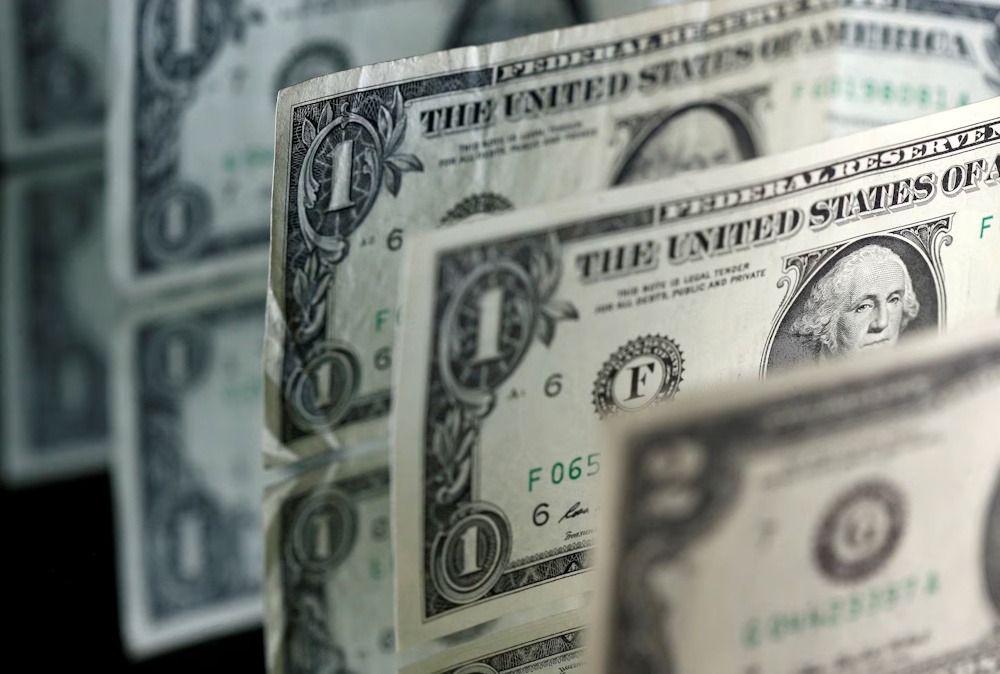
The dollar was poised for its first consecutive weekly gains in over three months on Friday, as rising Treasury yields and increasing expectations of additional Federal Reserve rate hikes maintained the greenback close to multi-month highs. The strength of the dollar has driven the euro down to a two-month low of $1.1370, positioning it for a third consecutive weekly decline, marking its most significant losing streak since the end of 2025. Sterling languished near a three-month low of $1.3220 and was on track for its worst weekly performance in four months. Markets have aggressively adjusted their expectations for the interest rate trajectory following the Fed’s policy tightening last week, with strong economic data and new energy supply concerns reinforcing that belief. A bond selloff, which sent long-dated US Treasury yields to their highest in more than 20 years, also provided a boost to the greenback.
The dollar index, which measures the US currency against a basket of peers, has climbed more than 1% this week to a two-month high, marking its first back-to-back weekly gains since June. However, the rally was experiencing a decline in momentum, last registering a slight decrease at 101.2. “Whilst the dollar should get a bid from higher yields, there are still ongoing lingering concerns around the US fiscal position, the unpredictability of US policy making,” said Khoon Goh. “I think that’s why the dollar has really struggled to continue to rally, even though yields continue to increase.” Oil prices surged over 3% on Thursday, reaching a one-week peak following a Houthi missile strike on Saudi Arabia, which rekindled concerns regarding potential supply disruptions and heightened inflation risks.
A chorus of hawkish Fed speakers strengthened expectations for further tightening, with Philadelphia Fed President Anna Paulson saying “some modest further tightening may be warranted”, while New York Fed President John Williams said “another rate hike may be appropriate by the end of the year.” At 158.8 per dollar, the Japanese yen remained close to a three-week low as markets assessed the Bank of Japan’s recent rate hike to a 31-year high and its policy guidance from last week as insufficiently hawkish. However, moves were tempered as traders remained cautious of the risk of official intervention following Tokyo’s issuance of a new verbal warning. Additionally, a former BOJ board member indicated that the central bank could potentially raise rates on a quarterly basis.
“Faster rate hikes have reduced the inflationary impact of expansionary fiscal policy, taking pressure off the currency,” Goldman Sachs said in a report. The bank revised down its 12-month USD/JPY forecast to 150 from 165. The Australian dollar inched higher to $0.7015, while the kiwi traded flat at $0.5663. The Reserve Bank of Australia is anticipated to increase interest rates by 25 basis points to a near 15-year high of 4.60% next week, marking what is likely to be the final rate increase in the tightening cycle. Elsewhere, the offshore yuan traded flat at 6.715 per dollar, as a Trump-Xi summit in Washington showed no signs of breakthroughs at a closed-door meeting on thorny issues such as AI, trade, Taiwan, and the war with Iran.