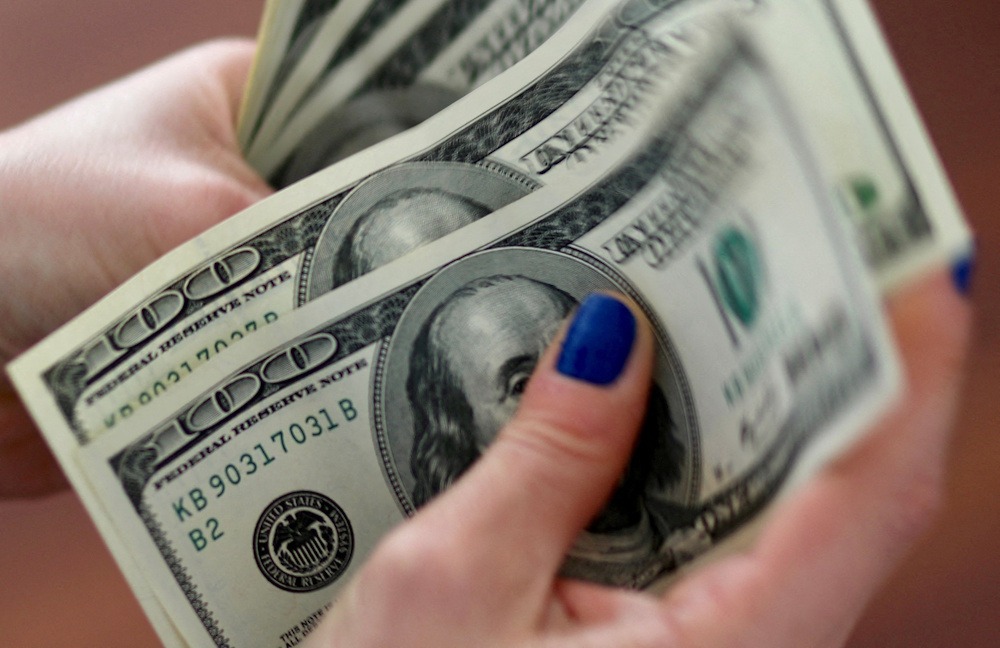
In Asia, trade was relatively quiet on Thursday, but the dollar remained at its highest level in 18 months as hawkish minutes from the US Federal Open Market Committee indicated that policymakers saw inflation as the largest threat to their outlook. Following a 0.3% increase on Wednesday, the dollar index remained unchanged at 102.25, indicating its strength relative to a basket of six currencies. The dollar is still hovering near its all-time high, which it reached last week amidst the market chaos that followed the so-called “Liberation Day” tariff announcement; this level of support dates back to April 9, 2025. Minutes released on Wednesday showed that there were disagreements among Federal Reserve policymakers regarding the reasoning behind the unanimous decision to increase interest rates by a quarter of a percentage point at the US central bank’s meeting on 15-16 September.
“The FOMC’s minutes reinforced the hawkish tone accompanying the Fed’s September rate hike, with most participants still viewing further tightening as appropriate and almost all seeing inflation risks tilted to the upside at the time of the meeting,” Westpac analysts wrote. The yield on the US 10-year Treasury bond was up 3 basis points at 5.303%. “The continued sell-off in US Treasuries is becoming an increasingly important driver for global markets,” MUFG analysts wrote. “Should long-end yields rise further, market attention could shift towards the broader tightening in US financial conditions and whether policymakers begin to signal greater concern over Treasury-market conditions.”
Still, nobody seems surprised that the Fed will keep its stance at its meeting later this month, and that was the main takeaway from the minutes. The CME Group’s FedWatch tool indicates that the likelihood of the US central bank keeping rates on hold at its upcoming two-day meeting ending October 28, as indicated by Fed funds futures, is 81.7%, which is somewhat higher than the previous day’s suggested probability of 80.1%. as a brief decline, the US dollar recovered to trade at 158.18 yen, up 0.1% against the yen.
This came as statistics indicated that Japan’s current account surplus for August was 4.062 trillion yen ($25.7 billion), surpassing experts’ median projection of 3.19 trillion yen. At $0.6955, the Australian dollar was down 0.1% from its previous value, while the kiwi dollar remained unchanged at $0.5602. In offshore trade, the US dollar remained unchanged at 6.7035 yuan against the Chinese yuan. Pound sterling remained flat at $1.3212, while the euro rose 0.1% to $1.1202.