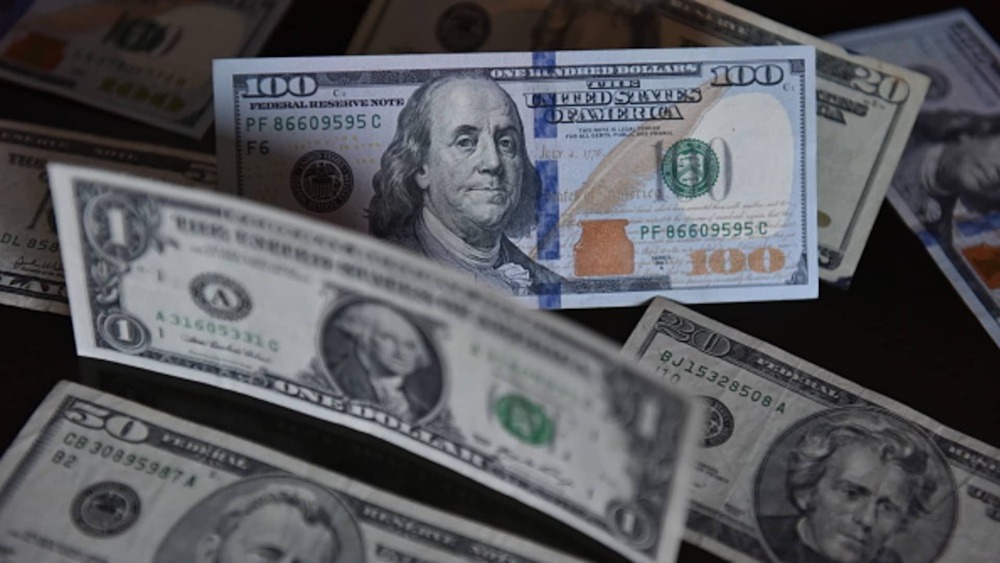
The dollar slipped from an 18-month peak on Thursday as a sharp drop in Treasury yields amid a risk-off mood weighed on the greenback, while cautious remarks from Federal Reserve officials tempered October hike expectations despite hot inflation data. The dollar index, which measures the US currency against a basket of peers, fell 0.2% to 101.99, relinquishing most of the gains it achieved following Wednesday’s stronger-than-expected inflation figures that propelled it to an 18-month high. That contributed to the euro’s rebound of 0.6% from an 18-month low to $1.1223, positioning it for its most significant increase in almost two months. Sterling strengthened 0.4% to $1.3250, recovering from a 13-month low.
Markets adopted a risk-off stance following the robust CPI reading, which reinforced expectations for prolonged elevated Fed rates and reignited concerns regarding the substantial debt levels of AI companies, consequently channelling safe-haven investments into Treasuries. The rally in US government bonds has resulted in the benchmark 10-year yield reaching 5.0933%, while the 30-year yield has decreased to 5.4462%, both marking three-week lows. “The dollar has gone down in a hurry … we think the biggest factor has been the decline in 30-year yields,” said Rodrigo Catril. “If the decline in yields were to extend, the dollar could struggle, but at this stage it would suggest that the dollar is probably going to consolidate” with expectations for Fed hikes still high, he added. Market pricing for an October Fed rate hike increased significantly to 50% following the CPI data release.
However, a number of Fed officials, including Vise Chair for Supervision Michelle Bowman and San Francisco Fed President Mary Daly, indicated that the central bank might prefer to wait for a more definitive outlook prior to the meeting on October 27 and 28, thereby moderating those expectations. “Despite the whole CPI number coming slightly stronger than expected, I think markets have sort of taken the view that maybe it was not hot enough to force the Fed’s hand for October,” said Khoon Goh. “(The) October (meeting) is also just a few days before the midterm elections as well,” he added. “And that’s possibly why the market doesn’t want to be more aggressive in pricing in for October.” The market’s attention will now turn to US producer price and retail sales data later in the day, with the former anticipated to indicate a significant increase in business costs from the previous month.
Investors will closely monitor comments from Federal Reserve officials, including Chair Kevin Warsh, during the IMF-World Bank annual meetings in Bangkok today for insights regarding the US central bank’s forthcoming actions. The Australian dollar fetched $0.6952, down 0.3%, following an unexpected decline in local employment in September. The kiwi experienced an increase of 0.6%, reaching a value of $0.5626. The Japanese yen appreciated to 157.675 per dollar, while the Swiss franc exhibited a gain of approximately 0.8%, reaching 0.8282. Elsewhere, the offshore yuan appreciated slightly to 6.6926 per dollar following data indicating that China’s factory-gate inflation increased last month due to rising commodity costs.