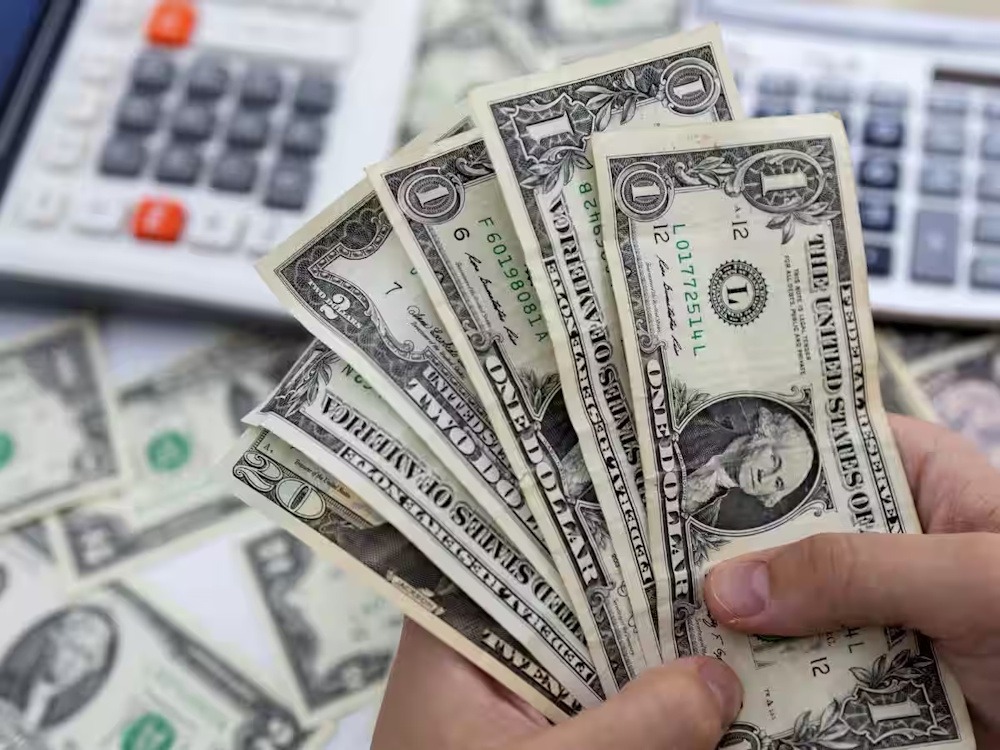
The U.S. dollar maintained its position at a one-month high on Tuesday as traders assessed a narrow yet persistent possibility of a rate hike at the Federal Reserve’s forthcoming meeting, despite declining oil prices alleviating some inflationary concerns. The dollar index, which measures the greenback against a basket of currencies including the yen and the euro, eased 0.07% to 101.45, with the euro up 0.09% at $1.1377. Against the Japanese yen, the dollar traded at 163.73, while sterling gained 0.09% to $1.3299. Although a pause in U.S. attacks on Iran led to a decline in oil prices and provided some relief from inflation concerns, U.S. Treasury yields experienced only a modest retreat relative to movements in other markets overnight. “The lack of meaningful buying at the front end of the Treasury curve has helped keep the U.S. dollar well supported,” said Chris Weston. The Federal Reserve is set to convene for a two-day policy meeting concluding on Wednesday.
A growing number of major brokerages believe there is a tangible risk of the Fed implementing a rate hike this week, considering the significant increase in oil prices throughout the month and the heightened tensions in the Middle East. Expectations for a rate hike of at least 25 basis points from the Fed at its policy announcement stand at 37.9%, according to CME FedWatch, an increase from 16% a week prior. Markets are assigning a probability of approximately 81% for an increase at the central bank’s meeting in September. “If we do get a surprise hike, surely that’s going to lend support to the dollar, probably going to see new highs and probably sustain the level of strength on the dollar especially against the lower yielders, which are Japanese yen and Swiss franc,” said Mahjabeen Zaman. Investors will also focus on U.S. second-quarter GDP data and the Fed’s preferred inflation measure, core PCE inflation, this week for additional insights into the health of the world’s largest economy.
In other major currencies, the Australian dollar weakened 0.11% against the greenback to $0.6981, as Australia’s central bank chief Michele Bullock indicated that underlying inflation remained excessively high and that a further slowdown in domestic demand might be necessary to control prices. New Zealand’s kiwi was valued at $0.5772. On Monday, the performance of Wall Street was varied, as the Dow increased by half a percent, the S&P 500 remained nearly unchanged, and the Nasdaq experienced a slight decline. The Bank of England and Bank of Japan are anticipated to hold interest rates steady during their meetings on Thursday and Friday, respectively, while adopting a prudent approach towards inflation. With the yen pinned near last week’s 40-year lows against the dollar, the BOJ is expected to leave the door open to further hikes to stem the currency’s decline, although policymakers will likely maintain ambiguity regarding the pace and timing of the moves. Verbal interventions aimed at bolstering the Japanese currency have thus far produced limited outcomes.
“With no change in rates expected, we think that the BOJ will need to strike a fairly hawkish note in order to make clear to markets that it is credible in its attempts to both achieve its inflation mandate and support the yen,” said Matthew Ryan. In an interview on Tuesday, Japanese Finance Minister Satsuki Katayama reaffirmed that Tokyo’s approach to responding to currency fluctuations as necessary remains consistent, a viewpoint she indicated was also held by Washington. She refrained from providing a comment when enquired about the potential for a coordinated yen-buying intervention by Japan and the United States. She also added that a weak currency has both merits and demerits for the economy.