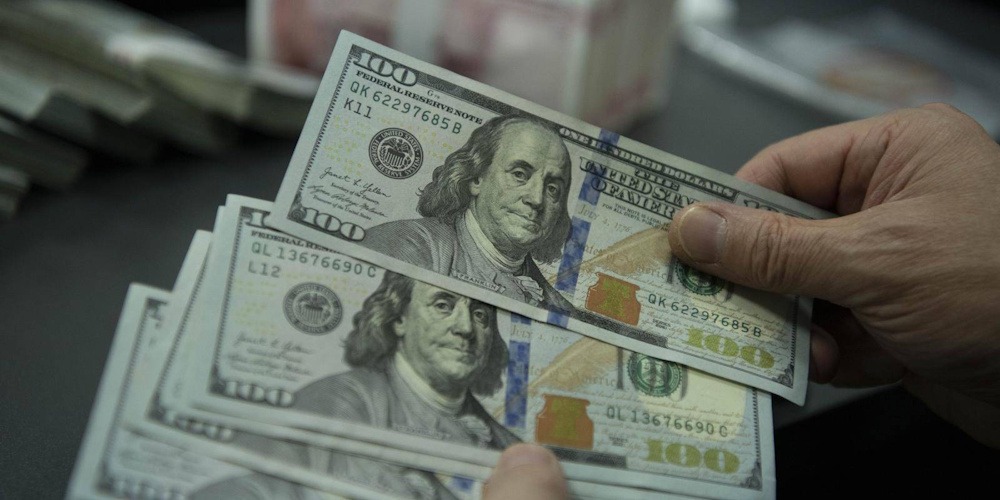
The dollar experienced a decline against its major counterparts in Asian trading on Monday following the U.S. decision to pause its bombing campaign in Iran over the weekend. This development led to a decrease in oil prices and an increase in global investor confidence. Against the yen, the U.S. dollar experienced a decrease of 0.2%, settling at 163.585 yen, marking its most significant drop since July 10. The euro appreciated by 0.3%, reaching $1.1403, while the British pound experienced a 0.2% increase, climbing to $1.3352.
Oil prices experienced a significant decline in early Asian trading, as Brent crude fell by 4.2% to $92.74 following the U.S. military’s temporary suspension of its two-week-long strikes. Iran will halt its own attacks as long as the U.S. does the same, a senior Iranian official told on Sunday, following a China-led push to resume stalled diplomatic efforts in Pakistan to end the war. “Markets remain on the edge around the U.S.-Iran conflict and the path of oil prices,” analysts wrote in a research report. “While it is difficult to know for sure how things will pan out, our base case remains for de-escalation over time for several reasons and as such for oil prices to decline.”
In other major currencies, the New Zealand dollar appreciated by 0.1% to $0.5791, while the Australian dollar also increased by the same percentage to $0.6996. The U.S. dollar index, which measures the greenback’s strength against a basket of six currencies, remained unchanged at 101.21 at the beginning of a week filled with central bank meetings, including that of the Federal Reserve.
Traders’ expectations regarding a potential increase in interest rates by the Federal Reserve at its forthcoming policy meeting have moderated somewhat in comparison to the previous week. Fed funds futures indicate an implied probability of 33.7% for a 25-basis-point hike at the upcoming two-day meeting concluding on Wednesday, a decrease from 37.4% observed on Friday, as per the CME Group’s FedWatch tool.