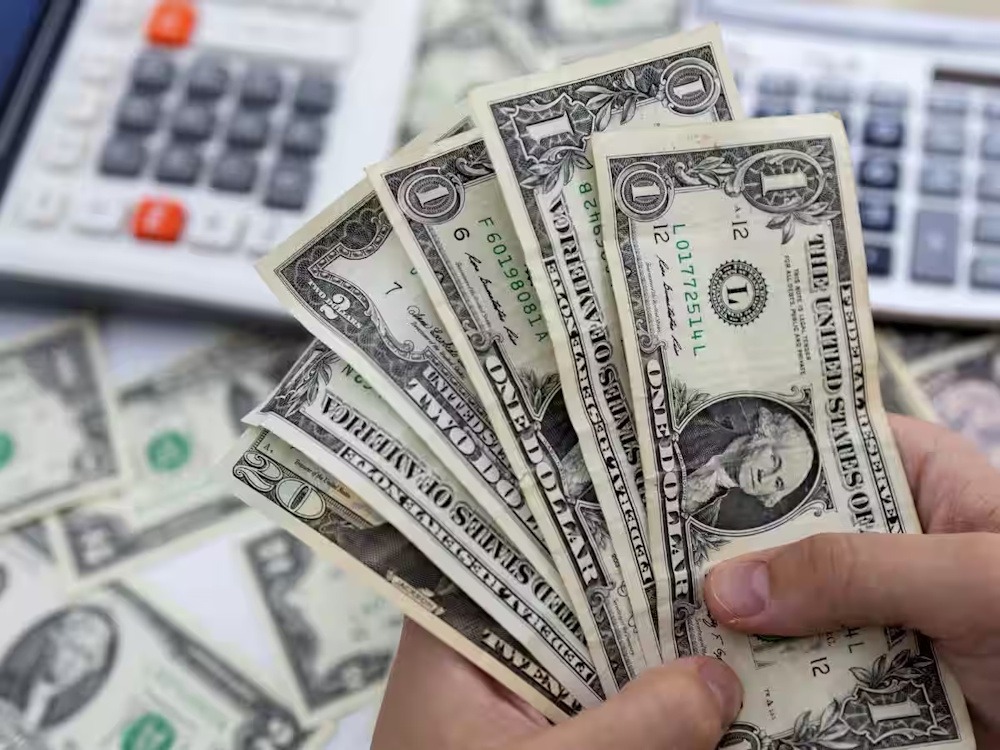
The U.S. dollar was on track for a second straight weekly decline on Friday amid cautious trading, as a ceasefire between Israel and Lebanon, along with the potential for renewed discussions with Iran, led investors to reduce their safe-haven holdings. A 10-day ceasefire between Lebanon and Israel commenced on Thursday, with President Donald Trump indicating that the next meeting between the U.S. and Iran may occur over the weekend. In the current landscape, U.S. and Iranian negotiators have moderated their expectations for a sweeping peace agreement and are now pursuing a provisional memorandum aimed at averting a resurgence of hostilities, with the nuclear matter continuing to pose a significant challenge. Currencies exhibited limited movement during Asian trading hours as market participants anticipated additional information, resulting in the euro maintaining its position against the dollar at $1.1783. The common currency is poised for a third consecutive weekly gain, with sterling currently trading at $1.3526. Both currencies have now significantly recovered from the losses caused by the Iran conflict, currently trading close to their peak levels in the past seven weeks.
The dollar index, which assesses the strength of the greenback against six major peers, remained stable at 98.212. It appeared poised for a second consecutive week of losses, relinquishing the majority of the gains triggered by the conflict, as optimism surrounding a ceasefire persisted in diminishing the demand for safe-haven assets. The markets are currently experiencing a consolidation phase, having already factored in some optimism regarding the extension of the ceasefire earlier this week,” stated Sim Moh Siong. The upcoming catalyst will be essential for facilitating a more definitive movement. The dollar is no longer on a one-way trajectory from this point onward. The Australian dollar was valued at $0.7163, maintaining its position close to four-year highs amid strong risk sentiment. The kiwi experienced a decline of 0.06%, settling at $0.5888. The dollar experienced a modest increase against the yen, reaching 159.26. Bank of Japan Governor Kazuo Ueda on Thursday stated that any decision regarding the timing of interest rate increases must consider the current low level of the nation’s real interest rate.
In other developments, market participants were closely observing the strategies policymakers will employ to address inflationary pressures stemming from the conflict, as central banks have adopted a predominantly cautious approach at this time. U.S. Treasury yields remained unchanged on Friday, following an increase in the prior session, as persistently high oil prices continued to fuel concerns about inflation. The two-year yield was last recorded at 3.7758%, whereas the benchmark 10-year yield remained stable at 4.3132%. Market expectations reflected in Fed funds futures indicate that participants are anticipating the Federal Reserve will maintain current interest rates for the remainder of the year. The finance ministers and central bank governors of the Group of Seven have reached a consensus to be prepared to take action in order to alleviate the economic and inflationary risks stemming from the energy price and supply shocks related to the conflict in the Middle East, as stated by French Finance Minister Roland Lescure on Thursday.
The measured perspective was reflected by European Central Bank policymakers, who minimized the likelihood of a rate increase occurring this month, contending that additional data is required and that the exact timing of any adjustment is of lesser significance. Last week, new applications for U.S. unemployment benefits decreased more than anticipated, indicating that labor market conditions continued to show stability. That is also observed providing the Fed with the flexibility to maintain interest rates at their current levels for an extended period as policymakers assess the inflationary impacts stemming from the war. “Hiking into a negative supply shock cannot compensate for energy-driven inflation in the near term and risks exacerbating growth headwinds,” as stated in a research note.