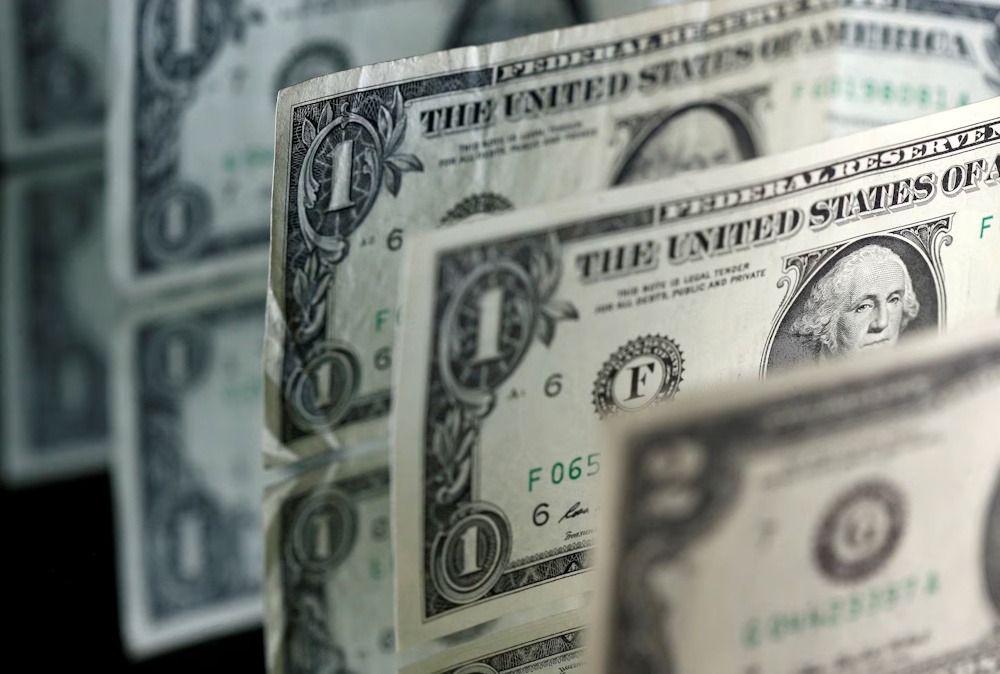
The Dollar Index failed to break its losing streak yesterday, extending it for the eighth consecutive session, thereby matching the longest decline since April 2011. The current trend could conclude today if the dollar maintains its upward momentum. In light of the stronger than anticipated GDP figures from the UK and China, along with a robust jobs report from Australia, the greenback is exhibiting strength against the majority of G10 and emerging market currencies. Risk appetites appear to remain strong, as the Nikkei mirrors the upward trajectory of the US S&P 500 and Nasdaq, reaching record highs. A potential two-week extension in the US-Iran ceasefire could have positively influenced sentiment. However, with the blockade of Iranian ports in effect, certain forecasts indicate that storage capacity may be depleted within two weeks. The two-week extension is likely to intensify pressure on Tehran.
Meanwhile, President Trump indicated that the investigation into the Federal Reserve will persist, acknowledging that this may postpone the confirmation of Kevin Warsh to succeed Powell. The implications of an incomplete confirmation by the end of Powell’s term as chair remain uncertain. However, the president’s warning regarding the potential dismissal of Powell has been acknowledged, yet seemingly overlooked. The euro maintained its position above $1.1770 yesterday, with much of the North American afternoon spent hovering around the $1.1800 mark. The level approached nearly $1.1825, aligning with the (61.8%) retracement target of the euro’s drop from the peak observed last January (~$1.2080). Sellers responded by driving it down to nearly $1.1770. Initial support is located around yesterday’s low and subsequently at $1.1755. The dollar maintained its position above Monday’s low (~JPY158.60) against the yen yesterday, yet encountered resistance near the 20-day moving average, which was located just below JPY159.20.
Initially, it was sold to a six-day low near JPY158.25, seemingly influenced by the implied threat from Japan’s Finance Minister Katayama. Following a meeting with US Treasury Secretary Bessent, he indicated that officials were ready to take “bold action” to support the yen. However, the dollar has rebounded to move just above JPY159 during European trading hours. During the course of the month, there has been a single minor breach of the JPY158-JPY160 range. Sterling was limited to approximately one-third of a cent beneath $1.3580 yesterday. It concluded the day with minimal variation in a lackluster trading session. Monday’s high was approximately $1.3590, just under the (61.8%) retracement of the pound’s drop since the late January peak (~$1.3870). Today, it achieved a new two-month high prior to the stronger than anticipated February GDP of 0.5%, subsequently reversing lower. It has been traded below yesterday’s low (~$1.3545). Initial support is identified in the $1.3500-25 range. Options totaling approximately GBP307 million at a rate of $1.3520 are set to expire today.
The Canadian dollar exhibited resilience yesterday, concluding the day on a strong note. The US dollar remained just under Monday’s peak (~CAD1.3795) during early trading in North America. The asset exhibited a downward trend for the majority of the session, breaching Monday’s low of approximately CAD1.3730 during the afternoon in New York. It fell beneath CAD1.3715, marking the lowest point since March 23. The market has stabilized during the European morning session and has returned to the range observed yesterday. The CAD1.3740-60 zone presents the first obstacle. The Australian dollar climbed to nearly $0.7180 yesterday and continued its upward trajectory to approach $0.7200 today, marking its highest point since mid-2022. The upward momentum failed to hold, resulting in the Aussie slipping below its closing levels and showing a slight decline for the day. Proximate support levels could be identified at $0.7150, followed by $0.7125.