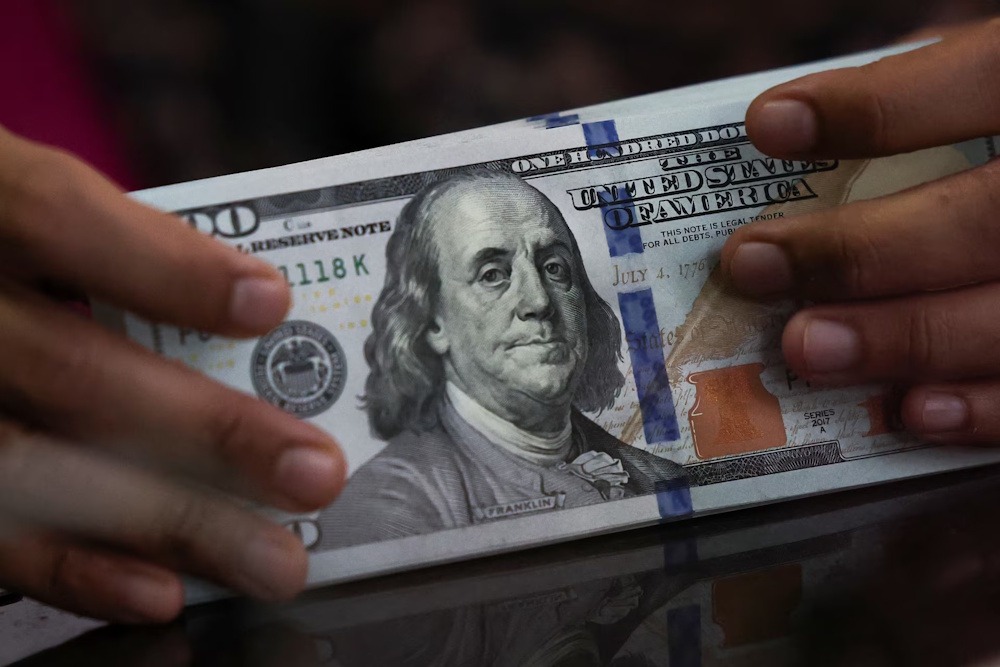
The dollar strengthened on Monday, while the yen fluctuated close to a seven-month high as investors considered potential rate hikes from the Federal Reserve and the Bank of Japan later this week. Meanwhile, increasing oil prices, driven by the escalating conflict in the Gulf, tempered market sentiment. Global policymakers are contending with volatile pricing pressures stemming from the six-month-long U.S.-Israeli conflict with Iran, which has driven oil prices significantly above $100 per barrel and disrupted the trajectory for interest rates, accompanied by fluctuations in long-end bond selloffs. The European Central Bank raised rates last week and warned of further hikes, setting the stage for the Fed policy decision on Wednesday and a widely expected rate hike from the BOJ on Friday. The Bank of England is anticipated to maintain its current stance on Thursday, although the voting is expected to be closely contested.
Traders increased their expectations for a Federal Reserve rate hike following data released on Friday indicating a rise in U.S. consumer prices in August; the CME FedWatch tool reflected an 86% probability of an increase this week, along with another anticipated move later in the year. “The Fed could decide to wait, but that is complicated by its October meeting being just ahead of the U.S. midterm elections and waiting until December to move will be too long,” said Shane Oliver. The euro was 0.1% softer at $1.1585, while sterling last bought $1.3516. The U.S. dollar index, which measures the greenback against six other currencies, was 0.12% higher at 99.22 after two consecutive weeks of modest declines. U.S. Treasury yields persisted at elevated levels not seen in several years, with the 2-year yield, which generally aligns with Federal Reserve rate forecasts, slightly declining to 4.6148%, following an increase of 26 basis points in the previous week. The increasing yields and evolving rate expectations have thus far not succeeded in elevating the dollar, as central banks in significant economies are also anticipated to increase rates, amidst ongoing concerns regarding the credibility of Fed policy.
Fed Chair Kevin Warsh must align his assertive statements with concrete policy measures to avoid jeopardising his credibility in managing inflation, according to strategists at Commonwealth Bank of Australia in a recent note. “There is a small chance the USD eases if the FOMC hikes but Warsh plays down the risk of follow-up hikes in the press conference,” they said. Meanwhile, Brent crude futures increased by almost 3% to $107.6 per barrel, as new Houthi strikes on Saudi Arabia and Iranian attacks on vessels in the Gulf intensified supply concerns, particularly in light of the closure of a crucial Saudi oil pipeline. The Japanese yen was 0.3% weaker at 154.03 per U.S. dollar, though it remained not far from the seven-month high of 152.89 that it touched last week. Signs are emerging of a shift in market sentiment for the currency, with speculators turning to a net long position on the yen for the first time since February. “A 25 bps hike is already almost fully priced,” analysts said in a note.
“For the yen to strengthen further, the BOJ will have to signal that they are planning to stick to the faster pace of hikes.” TD Securities analysts indicated that failing to consider an additional rate hike for either the October or December meeting could provoke a swift rally in the dollar/yen, potentially pushing it back to the range of 157 to 160. They anticipate the BOJ will increase rates approximately once per quarter, moving away from its gradual, semi-annual approach. The yen is up 4% this month, driven by expectations that the Bank of Japan will accelerate its rate hikes and indications of potential asset repatriation by domestic investors. “Not hiking would be a catastrophic error. Not communicating robustly will be a significant own goal,” said James Athey, adding that expectations about repatriation and GPIF asset allocation changes are playing a significant role in the yen move.