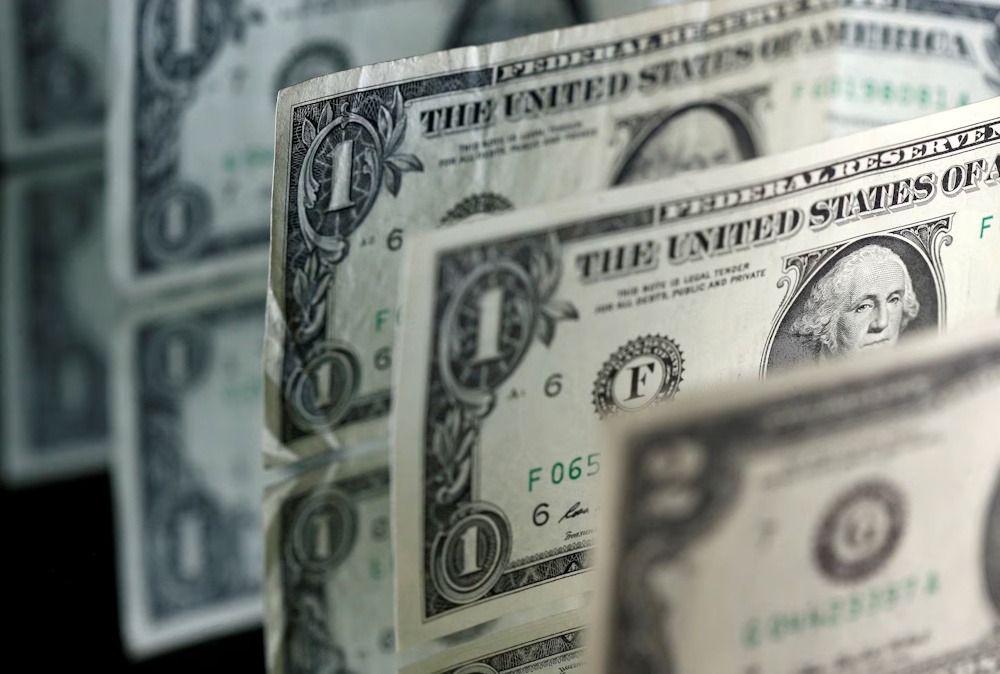
The US Dollar Index experiences an uptick as market participants assign a 56.5% probability to the likelihood of an additional rate hike occurring in October. Fed Chair Kevin Warsh emphasises that enduring inflation continues to be excessively elevated, indicating the necessity for additional tightening measures. Kashkari emphasised that enduring inflation continues to be excessively elevated, notwithstanding solid growth and a vigorous labour market. The US Dollar Index, which measures the value of the US Dollar against six major currencies, is experiencing an upward movement following two consecutive days of declines, currently trading around 100.30 during Asian hours on Monday. The Greenback maintains its position in the context of hawkish sentiment regarding the Federal Reserve’s policy outlook. Last week, the US Federal Reserve implemented a 25-basis-point increase in interest rates, marking its first adjustment in three years. This decision was aimed at addressing inflationary pressures, with officials indicating the possibility of further increases in the months ahead.
Fed Chair Kevin Warsh said that “the plain fact is that inflation is too high and has been for too long.” He added that “This summer’s inflation readings do not tell me that underlying trends have meaningfully improved.” Markets are now pricing in nearly a 56.5% chance of another US rate hike when the Fed meets next in October, compared with nearly 42.5% a week ago, according to the CME FedWatch tool. Strategists note that the US Dollar ended the previous week on a solid footing, with the “USD … mixed to slightly firmer on Friday so far to round off the week of broad gains.” They highlighted the Japanese Yen as “the main mover overnight,” pointing out that the JPY “has weakened more than 1% in the wake of the BoJ policy decision (25bps hike, as expected, but with two dissenters) and Governor Ueda’s mixed press conference.” Scotiabank adds that the pressure on the currency has been sustained, with the “JPY has slipped more than 2% on the week to a two-week low,” underscoring the contrast between a generally firm Dollar and a notably softer Yen into the weekend.
In the daily chart, the Dollar Index Spot is trading at 100.30, maintaining a constructive bullish tone as the price remains above both the nine- and 50-period Exponential Moving Averages. The short-term EMA is positioned above the longer one, with both exhibiting a gentle upward slope, indicating a prevailing trend. Meanwhile, the Relative Strength Index (14) at 62.6 resides in positive territory, not yet indicating overbought conditions, suggesting that upside momentum continues to be favourable. On the downside, initial support is observed at the nine-day EMA around 99.85, while the 50-day EMA at 99.73 offers a more substantial layer of demand should a pullback extend. As long as the index maintains its position within this moving-average band, any dips are likely to be interpreted as corrective within the larger upward trend. A definitive breach below the 50-EMA would be necessary to challenge the prevailing bullish sentiment. Kashkari’s latest remarks score 6.2 on the FXS Speechtracker, essentially in line with the 6.3 historical average and signalling a steady hawkish tone.
Emphasis that inflation “remains too high,” extends beyond oil, and must be addressed even as growth, productivity, and the labour market stay robust underscores a message of persistent price pressures amid resilient activity. By emphasising that the bond market falls under the Treasury’s purview while expressing optimism that growth may alleviate inflation, the speech suggests a commitment to ongoing policy vigilance rather than an immediate shift. The FXS Fed Sentiment Index decreased by 1.47 points to 150.61, suggesting a slight reduction in perceived hawkishness while still remaining well above the neutral threshold of 100. This maintains a distinctly hawkish position, indicating that even with a minor softening in tone, markets continue to perceive the Fed as leaning toward tighter policy, as evidenced by the FXS Fed Sentiment Index and FXS Speechtracker.