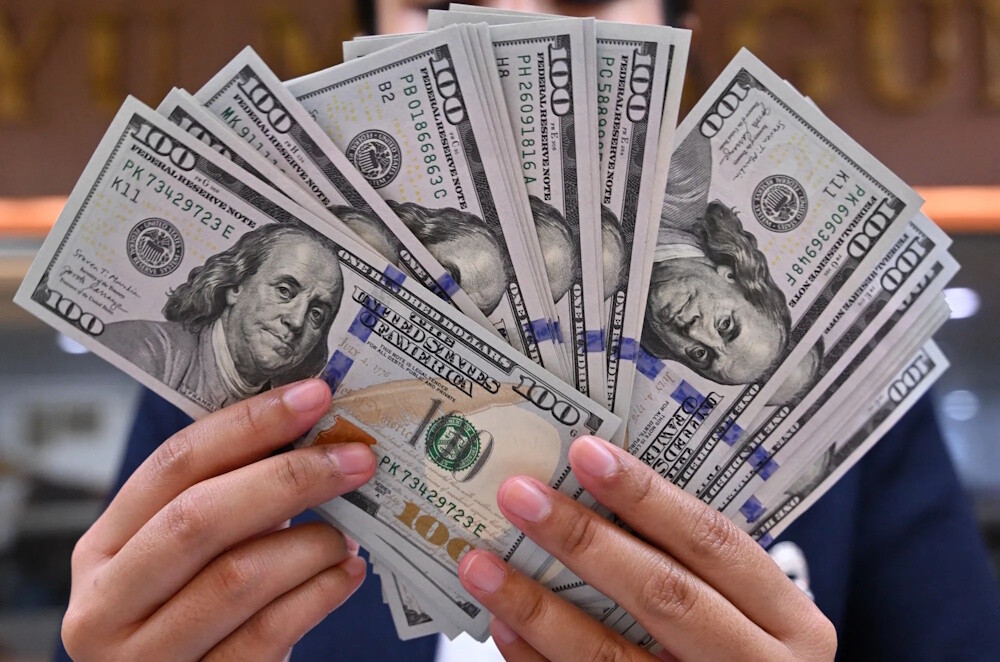
The dollar was maintaining its recent gains on Wednesday, trading close to multi-week highs against several major peers in anticipation of a Federal Reserve decision that traders expect will initiate the first of several potential U.S. interest rate hikes. The dollar has appreciated this week in tandem with rising yields, making significant gains against the yen and the New Zealand dollar, which reached a two-month low of $0.5737 during the Asia session, while the yen fell to a one-week low of 155.43 per dollar. “A 25-basis-point increase is about 90% priced, implying the dollar will receive a modest boost if the Fed increases,” said Carol Kong. “There is a small chance the dollar eases if the (Fed) hikes but (chair Kevin) Warsh plays down the risk of follow-up hikes in the press conference. In the event the Fed does not increase the funds rate, we expect a steep 1%+ fall in the dollar.”
At $1.1545, the euro was close to Monday’s one-month low of $1.1523, while sterling, at $1.3478, remained just above a six-week trough of $1.3464 that it reached on Monday. The Bank of England is anticipated to maintain its current interest rates during its meeting on Thursday. The Australian dollar stabilised at $0.7129. The currency markets have exhibited limited movement, even as global bond yields have risen in unison over the past few weeks. This phenomenon can be attributed to the synchronised movement of sovereign bonds, which has not significantly altered the relative yield differentials between countries. However, the dollar has gained traction in recent sessions due to the perception that, despite President Donald Trump appointing Warsh to lower interest rates, there will be a necessity for several hikes to demonstrate the Federal Reserve’s commitment to controlling inflation exacerbated by the Iran conflict and the consequent rise in energy prices.
“Especially given that the Fed has lost a bit of credibility with the markets, we are a bit sceptical that one, or even two, hikes are going to be enough to restore that credibility,” said Calvin Tse. The exceptions to the broad steadiness in foreign exchange primarily occur in Asia, and the Federal Reserve’s decision is likely to play a significant role in influencing the yen. The yen is currently experiencing its most significant rally in months, driven by a combination of a hawkish shift in expectations for Japanese interest rates, coordinated intervention by Japan and the U.S., and discussions surrounding Japanese investors repatriating capital. Traders are anticipating an 80% probability that the Bank of Japan will raise interest rates on Friday, according to LSEG data, and have factored in two increases of 25 basis points by the conclusion of January.
“The yen’s path will continue to depend heavily on interest rate differentials,” David A. Meier said in a research note. “We recently revised our USD/JPY forecasts to 155, reflecting some scepticism that the central bank can ultimately satisfy the pace of tightening currently priced in by markets,” he added. “Many uncertainties remain, including the political preference for low interest rates amid ongoing fiscal expansion.” Other regional standouts include South Korea’s won, which has surged more than 15% against the dollar since the end of June, propelled by a wave of repatriated capital and profits generated by chipmaking giants, alongside China’s steadfast yuan. A prolonged rally in the yuan has encountered a slowdown near 6.71 to the dollar; however, the currency maintains its gains despite an expanding disparity between low Chinese yields and rates in other markets.