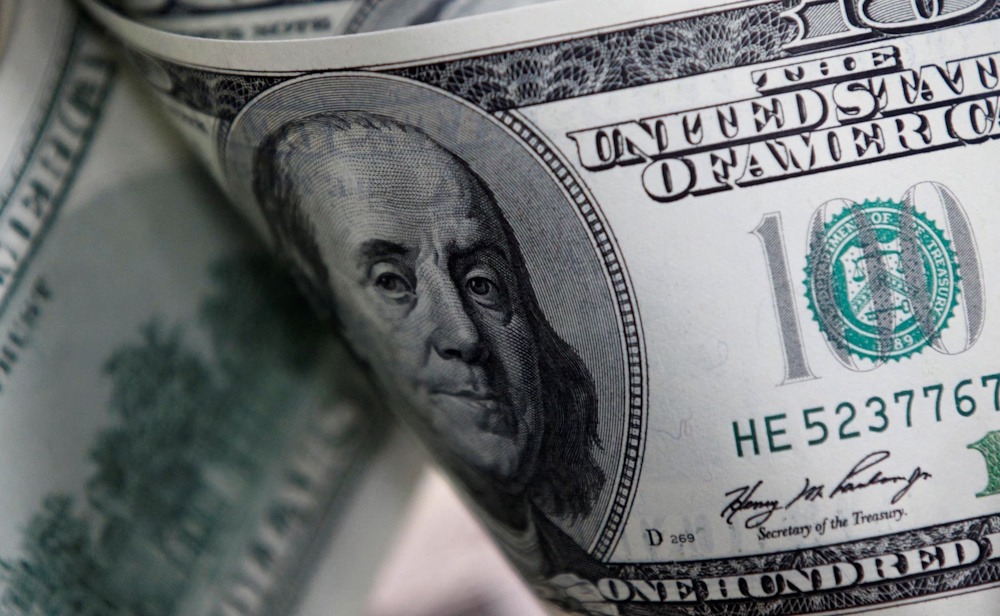
The dollar remained close to a two-week peak on Wednesday, as escalating tensions in the Middle East pushed oil prices upward, reigniting inflation worries and exerting upward pressure on bond yields. The dollar index, which measures the greenback against a basket of currencies including the yen and the euro, rose 0.11% to 99.79, its highest point since August 17. The euro experienced a decline of 0.14%, trading at $1.1576. The currency’s allure as a safe haven has been bolstered by increasing Treasury yields and heightened anticipations of a Federal Reserve rate increase, despite recent economic data falling short of projections. The U.S. initiated a series of airstrikes on Iran on Tuesday, leading to Iranian counteractions, marking the most significant escalation in recent weeks. Oil prices experienced an increase on Wednesday, building on the gains from the prior session, with Brent futures rising 0.75% to $95.36 a barrel and U.S. West Texas Intermediate crude advancing 0.41% to $90.62. The yield on the benchmark U.S. 10-year note increased to a peak of 4.812%, marking its highest level since November 2023, before declining to 4.804%. Japan’s benchmark 10-year yield continued its ascent to 3.01% on Wednesday, following its achievement of a three-decade high of 3% on Tuesday. “U.S. yields have been creeping higher again, lending support to the U.S. dollar,” said Daisuke Shimazu.
Increased yields prompt investors to seek refuge in safe-haven currencies, notably the U.S. dollar, simultaneously diminishing the appeal of riskier assets such as equities. Meanwhile, the New Zealand dollar experienced a decline of 1.01% against the US dollar, reaching $0.5844, marking its lowest level since August 13, despite the central bank’s decision to increase the official cash rate by 25 basis points to 2.75%. Market participants perceived the decision as less hawkish than anticipated, according to analysts. “Relative to where markets were and what they might have expected, it doesn’t meet their expectations,” said Westpac New Zealand strategist Imre Speizer. July JOLTS job openings and the August ISM manufacturing index, released overnight, fell short of market expectations. However, money markets have bolstered expectations of a Federal Reserve rate hike in light of Chair Kevin Warsh’s speech in Jackson Hole, Wyoming, last week. Markets are currently assigning a 68% probability to a Federal Reserve rate hike in September, an increase from approximately 40% just a week prior, as indicated by CME Group’s FedWatch tool. Data on jobs and consumer price inflation for August are set to be released prior to the Federal Reserve’s upcoming meeting on September 15 and 16.
This Friday’s employment report is anticipated to reveal that employers added 56,000 jobs last month, based on the median estimate of economists. Fed Governor Michael Barr stated on Tuesday that should inflation fail to subside promptly, it will be necessary for the central bank to increase interest rates. The British pound declined by 0.15% to $1.3495, marking its lowest level since August 14. Similarly, the Australian dollar experienced a decrease of 0.15%, settling at $0.7133. In the realm of cryptocurrencies, bitcoin experienced a reversal, trading up by 0.07% at $77,485.49, whereas ether managed to reduce its earlier losses, trading down by 0.27% at $2,413.74. The Japanese yen maintained its position against the greenback at 160.15 per dollar, following a prior decline to its lowest level since July 31. It remained on the weak side of the psychologically important 160-per-dollar threshold, despite overwhelming expectations of a Bank of Japan rate hike this month. U.S. Treasury Secretary Scott Bessent expressed robust backing for “decisive” monetary measures aimed at addressing yen weakness during a discussion with BOJ Governor Kazuo Ueda, according to the Treasury Department.
Ueda informed his intention to engage with his board during this month’s meeting to evaluate whether the economy is aligning with its forecast and to assess the potential escalation of inflation risks. The BOJ’s hawkish board member, Hajime Takata, stated on Wednesday that the bank ought to implement interest rate hikes swiftly in reaction to inflationary pressures. A rare joint intervention by the U.S. and Japan at the end of July provided short-lived relief for the fragile yen, pulling it away from the 40-year low of 163.99. However, the currency has since surrendered approximately half of the gains from this coordinated action. “There appears little chance of another round of actual co-ordinated intervention until there is some de-escalation in the Strait of Hormuz that takes heat out of the oil price,” said Tony Sycamore.