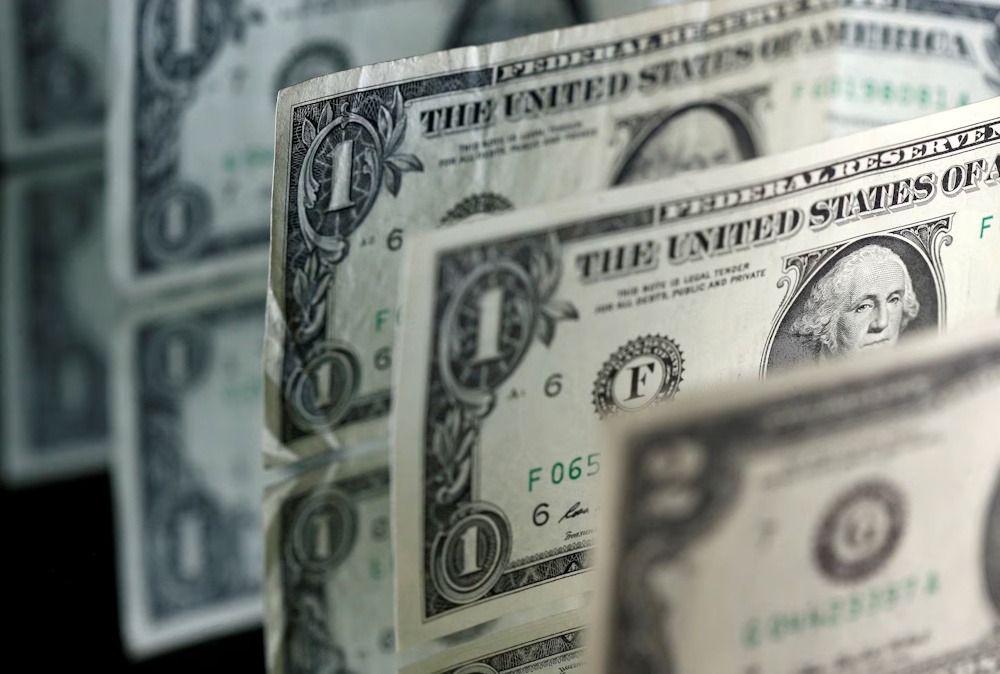
The U.S. dollar faced challenges in maintaining its gains against major counterparts on Tuesday, as investors analysed Washington’s broadened sanctions related to Iran and the renewed initiatives aimed at alleviating pressure on longer-dated Treasury yields. The euro was a shade higher at $1.1668, hovering near a three-month peak hit last week, while sterling was 0.1% stronger at $1.3639, near its six-month peak. U.S. Treasury Secretary Scott Bessent announced an extension of sanctions against Iran on Monday, cautioning nations to sever business connections with Iran or face the possibility of exclusion from the dollar-based financial system. “That potentially is one source of a slight reversal of the dollar weakness that we had at the end of last week,” Ray Attrill said in a podcast. “The suggestion being that, maybe if you’re going to be sanctioned and you’re not going to have access to U.S. dollars, then you better buy some dollars first before that happens.”
The Canadian dollar remained unchanged at $1.3844, stabilising following a 0.6% decline in the prior session, as the United States signalled a potential increase in tariffs on Canadian products after trade discussions faltered. The Japanese yen strengthened slightly to 159.21 per dollar, having relinquished most of its intervention gains but remaining significantly above a multi-decade low of approximately 164. The dollar index, which measures the U.S. currency against six major peers, was down marginally at 98.96 in Asia trades. It increased by 0.16% overnight, moving away from three-month lows in the context of a renewed debasement trade, yet it seemed to face challenges in maintaining this upward momentum. The New Zealand dollar and the Australian dollar experienced an increase of 0.1% prior to the release of the Reserve Bank of Australia’s August policy meeting minutes, with last recorded values at $0.5965 and $0.7157, respectively.
In the realm of cryptocurrencies, bitcoin experienced an increase of 1%, reaching a value of $78,817.34, following its most significant weekly gain in almost three and a half years during the previous week. Treasuries discovered a degree of support following a report indicating that the U.S. Treasury might utilise a portion of its cash balance to repurchase longer-dated bonds, aiming to alleviate borrowing costs. That follows Bessent’s unexpected announcement last week, which caught global bond investors off guard, regarding the Treasury’s decision to double the size of its quarterly repurchases of longer-dated bonds after yields hit their highest levels in nearly two decades. However, the relief was constrained.
The yield on the 2-year note, which typically aligns with expectations for Federal Reserve interest rates, remained unchanged at 4.246%, whereas the yield on benchmark U.S. 10-year notes stood at 4.704%. Market participants are anticipating Federal Reserve Chair Kevin Warsh’s inaugural address in Jackson Hole, Wyoming, on Friday. Traders are looking for insights regarding the recent surge in bond yields and seeking confirmation of his autonomy from the Trump administration. “Uncertainty over the Fed’s reaction function, coupled with growing doubts about its commitment to prioritising inflation, has sharpened attention on Chair Warsh’s upcoming remarks at Jackson Hole,” Sim Moh Siong wrote in a note. “Renewed policy uncertainty is constraining the scope for USD gains.”