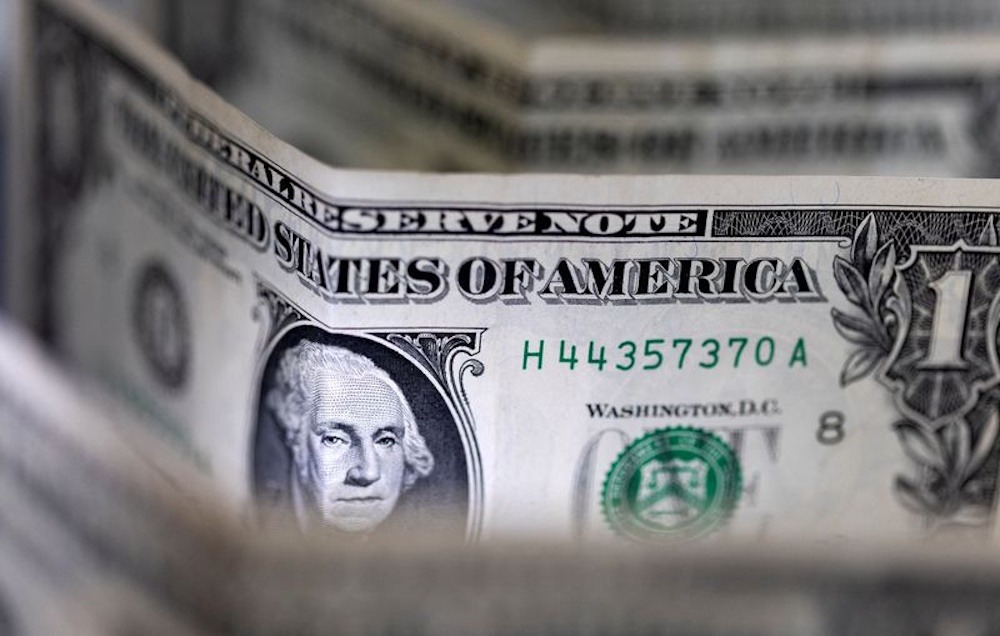
The U.S. dollar faced pressure on Monday but continued to be poised for its largest monthly increase in almost a year, influenced by tensions in the Gulf and in anticipation of employment data that may influence the Federal Reserve’s monetary policy direction. The U.S. and Iran exchanged pointed remarks over the weekend prior to reaching an agreement to halt reciprocal attacks and convene in Qatar on Tuesday, which has left investors apprehensive regarding the stability of the ceasefire. Oil prices experienced an uptick on Monday as strikes once more hindered energy shipping in the Strait of Hormuz, thereby bolstering safe-haven demand for the dollar.
The euro remained unchanged at $1.1387 following its decline to a 13-month low against the dollar last week, positioning it for a 2.3% decrease over the month. Sterling traded 0.1% lower at $1.3198 and experienced a decline of 2% for the month. The risk-sensitive Australian dollar fetched $0.6885, reflecting a decrease of 0.1% in early trade and positioning itself for a 4.1% decline over the month. The New Zealand dollar remained relatively stable at $0.5635, reflecting a decline of 5.9% for the month. The Japanese yen last traded at 161.75, continuing to languish near a 40-year low. The dollar index, which measures the greenback against a basket of currencies including the yen and the euro, was a shade higher at 101.36. It is now on course for a 2.5% increase for June, representing the largest monthly rise since July of the previous year.
The conflict with Iran has persisted in fuelling inflationary pressures, while an unexpectedly hawkish introduction from Kevin Warsh as Federal Reserve chair earlier this month has altered market anticipations regarding U.S. rate cuts for the year. Meanwhile, a tech-led global equity selloff is driving flows into the dollar as investors seek refuge. Investors are currently monitoring U.S. non-farm payroll and unemployment rates due this week, which may provide new insights into the robustness of the labour market and the future direction of Federal Reserve policy. We anticipate the USD will steadily appreciate in the upcoming weeks, driven by the narrative of ‘US exceptionalism,’ according to Joseph Capurso in a note.
A robust and enhancing labour market is conducive to elevated U.S. interest rates and a stronger dollar, he stated. The European Central Bank’s annual forum this week is under close scrutiny as investors keep a vigilant eye on the shifting landscape of central bank policies in the context of declining oil prices and fluctuations in the stock market. ECB President Christine Lagarde will inaugurate the forum on Monday, succeeded by a significant policy panel on Wednesday that includes Fed Chair Warsh. Market participants are anticipating a more definitive understanding of the new Fed chief’s stance.