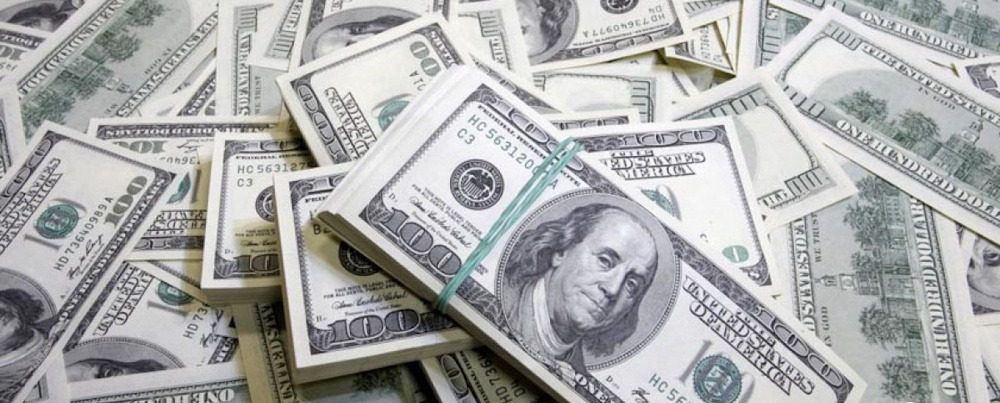
The dollar remained close to a one-week peak on Wednesday as risk sentiment deteriorated following a strong U.S. inflation report that pushed Treasury yields upward, while oil prices edged higher amid renewed uncertainty in the Middle East. The euro was positioned at $1.1735 while the sterling was at $1.3532, with both currencies experiencing a decline of approximately 0.05% against the US dollar during early trading in Asia. The U.S. dollar index, which monitors the greenback against a basket of six major currencies, remained stable at 98.335, close to its strongest level in a week. It appears to reflect a more cautious risk sentiment, in essence. “The U.S. dollar has been tracking risk sentiment very closely throughout the war,” said Ray Attrill. The absence of positive momentum in the equity market is also a contributing factor, he noted.
The U.S. consumer price index experienced a 3.8% increase over the 12 months ending in April, marking the largest year-on-year rise since May 2023, driven by the oil shock resulting from the conflict with Iran that elevated prices. Meanwhile, expectations for a peace agreement in the Middle East diminished as U.S. President Donald Trump remarked that a ceasefire with Iran was “on life support” following Tehran’s dismissal of a U.S. proposal to conclude the conflict and its adherence to a set of demands that Trump labeled as “garbage.” Oil prices concluded the trading session on an upward trajectory, with Brent crude futures recently recorded at approximately $108 per barrel. The yield on the U.S. two-year note, which generally aligns with expectations regarding Federal Reserve interest rates, increased to 3.9956%. The yield on benchmark U.S. 10-year notes increased to 4.4688%.
Markets have effectively eliminated the possibility of a rate cut from the Fed this year, with the likelihood of a hike of at least 25 basis points at the central bank’s December meeting increasing to 35%, as indicated by CME’s FedWatch Tool. The Australian dollar was valued at $0.72365, while the New Zealand dollar stood at $0.5954, with both currencies remaining largely unchanged. The Japanese yen remained relatively stable at 157.715, following a sudden strengthening on Tuesday that fueled speculation regarding a potential “rate check” by authorities, typically seen as a precursor to currency intervention.
U.S. Treasury Secretary Scott Bessent stated that both the U.S. and Japan view excessive volatility in the currency market as undesirable, remarks interpreted as providing some backing for Tokyo’s recent intervention efforts to stabilize the yen. In other developments, China’s yuan was valued at approximately 6.79 per dollar, close to its highest level since February 2023, as market participants anticipated this week’s meeting between Trump and Chinese President Xi Jinping in Beijing.