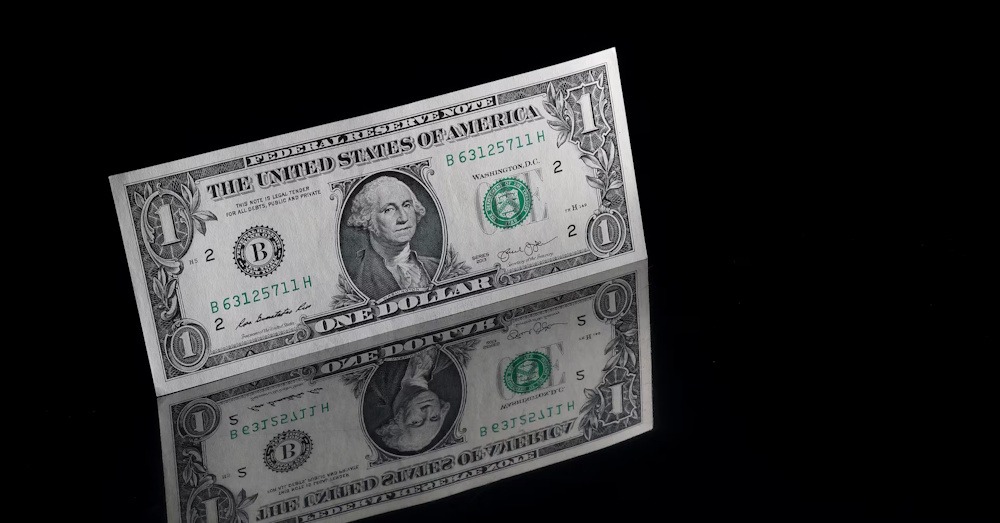
The dollar advanced for a fifth consecutive session in Asian trade on Monday as traders increased their expectations for Federal Reserve tightening next year, while investors overlooked an unexpected contraction in the Japanese economy in the third quarter. The US dollar index, which measures the greenback’s strength against a basket of six currencies, advanced for a fifth straight day, up 0.1% at 103.47, its highest since April 2025. “Markets are pricing higher US rates in the near term, but also a greater drag on medium-term US growth from restrictive policy,” MUFG analysts wrote. “That slowdown has yet to materialise.” The dollar has responded to hawkish commentary from Federal Reserve officials and a robust October inflation report, which have rekindled expectations that the US central bank will need to implement aggressive measures to control cost-of-living pressures.
Most other currency pairs remained stable during Asian trading hours. The euro declined by 0.1% to $1.1016, while the British pound remained unchanged at $1.3205. The Australian dollar decreased by 0.2% to $0.6763, and the New Zealand dollar held steady at $0.5520. The yen remained close to two-month lows against the dollar and showed minimal movement against the euro as market participants evaluated the implications of the latest Japanese GDP data on the policy trajectory of the Bank of Japan. Asia’s second-largest economy experienced a contraction of 0.1% on an annualised basis during the July-September quarter, according to data released, falling short of the anticipated growth rate of 0.3%. The yen exhibited fluctuations between gains and losses, maintaining a relatively stable position against the dollar at 159.59 yen and showing a modest 0.1% appreciation against the euro at 175.81 yen.
These levels are near those at which US and Japanese authorities are thought to have intervened earlier this year. “Unless weakness spreads into wages, services and underlying domestic demand, the BOJ is likely to look through the soft patch,” said Masahiko Loo. “The yen may take the initial hit, but expect strong resistance to further weakness in the 160s,” he added. “Intervention risk rises, while the risk-reward of adding fresh yen shorts becomes increasingly unattractive at these levels.” Against the Chinese yuan, the US dollar remained unchanged at 6.6718 yuan in offshore trade following Monday’s data, which indicated that China’s industrial output increased at a slower rate in October, rising by 4.8% compared to the same month last year, while retail sales growth also showed signs of deceleration.
Fed funds futures indicate a 91.1% probability of a 25-basis-point increase at the upcoming two-day meeting of the US central bank concluding on December 9. In contrast, the likelihood of a more substantial 50-basis-point hike is assessed at 8.9%, a decrease from 11.5% observed on Friday, as per the CME Group’s FedWatch tool. Traders have priced in four rate hikes by September next year, albeit by a slim margin, the tool shows. The US central bank “has some work to do on inflation,” said Kansas City Federal Reserve President Jeff Schmid on Sunday. He is not a voting member of the Federal Open Market Committee this year. The yield on the US 10-year Treasury bond was down 0.6 basis point at 5.1453%.