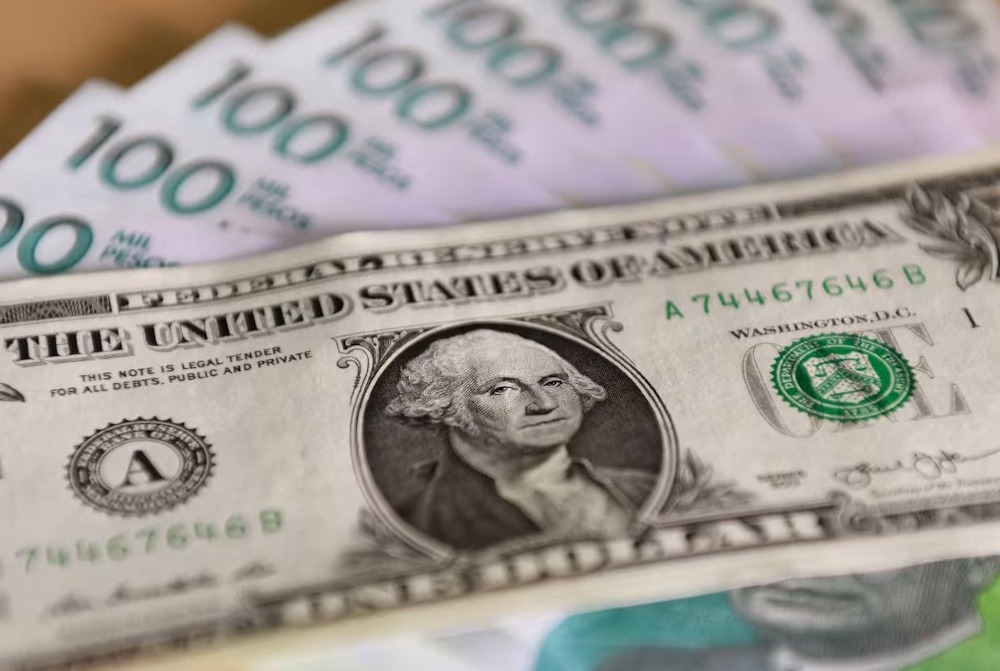
The dollar ascended to a 19-month peak against major counterparts on Thursday, bolstered by increasing anticipations of a Federal Reserve rate increase, while the yen approached the significant 160-per-dollar threshold in the wake of a dovish address from a central bank official. Traders increased their positions on the likelihood of additional Federal Reserve tightening following stronger-than-anticipated inflation data for October and a succession of hawkish comments from officials at the US central bank. These officials voiced concerns regarding persistent inflation and did not dismiss the potential for a more significant 50-basis-point hike.
Several prominent brokerages, including Goldman Sachs, anticipate an additional interest rate increase early next year, alongside one expected in December. The dollar index, which measures the greenback against a basket of currencies, rose by 0.15% to 103.02, the highest since April 2025. New York Fed President John Williams is set to appear on a panel late Thursday that will be closely watched given his “pre-October FOMC meeting views the Fed had time on rate hikes,” said Gavin Friend in a note. “Fast forward two weeks and following a hotter-than-forecast October CPI report, Fed officials appear to be falling over themselves to talk up rate hikes,” Friend said. “Any guidance from Williams will be seized on.” Against the Japanese yen, the dollar reversed an earlier decline to trade 0.04% higher at 159.83, supported by significant interest-rate differentials as traders heightened their expectations for additional Federal Reserve rate increases.
It reached a peak not seen in over two months earlier on Thursday. Bank of Japan board member Toichiro Asada, one of two dovish policymakers who dissented from September’s decision to increase borrowing costs to 1.25%, expressed resistance to calls within the board for a near-term interest rate hike. In a speech, he cautioned that premature rate hikes could negatively impact growth and lead to a decline in underlying inflation. Earlier, a warning from Japan’s top currency diplomat Atsushi Mimura that it was “too early to forget” intervention by Japanese authorities during the summer pushed the dollar/yen pair to its lowest point of the day; however, the respite for the yen was brief. “Once dollar/yen rises above 160, I think caution will increase another notch,” said Sho Suzuki. “For it to move higher from there, the dollar would need to strengthen further, for example, through a further rise in expectations for Fed rate hikes, or a drop-off in expectations for BOJ rate hikes.
Without something like that, the pair may lack enough momentum to test a break above 160,” he said. Many analysts in a Reuters poll anticipate the next BOJ rate hike could occur as early as next month. That perspective was bolstered on Thursday by data indicating that Japan’s annual wholesale inflation re-accelerated to 7.1% for the year ending in October, an increase from the 6.8% annual rise recorded in September. The euro appreciated by 0.06% against the US dollar, reaching a value of $1.1096, whereas sterling experienced a decline of 0.1%, settling at $1.3266. The Australian dollar remained relatively stable against the US dollar at $0.6847, whereas New Zealand’s kiwi experienced a slight decline of 0.05%, settling at $0.5559.