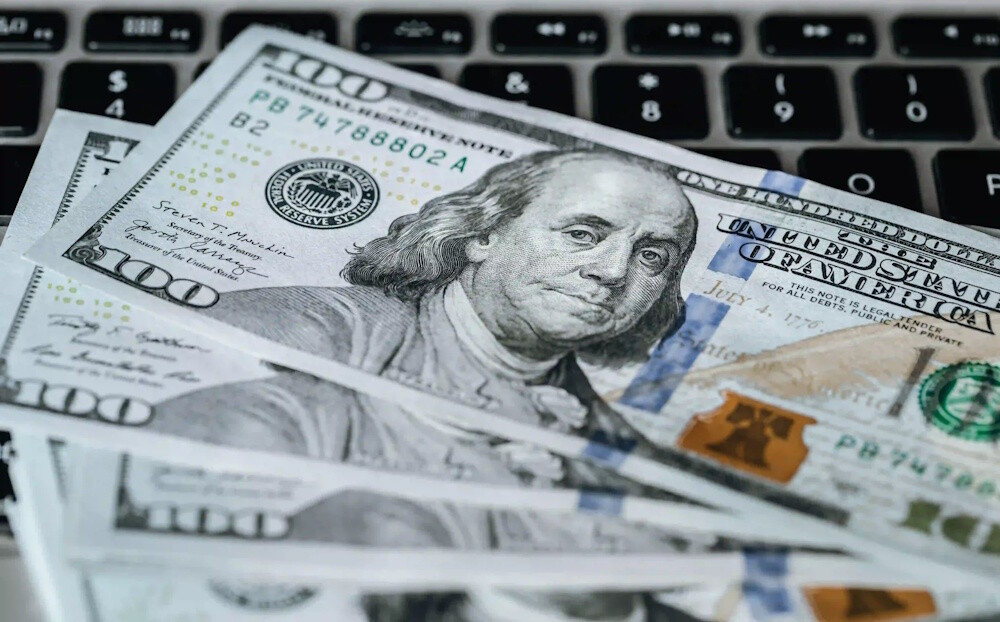
The US dollar stabilised on Thursday following the Federal Reserve’s decision to maintain interest rates as anticipated, while suggesting that forthcoming inflation data would impact future policy decisions, resulting in investor uncertainty regarding the outlook for rates. The Fed decided to postpone any adjustments to borrowing costs until following next week’s midterm election, resulting in a 10-2 vote. This decision was accompanied by an enhanced evaluation of an economy that the central bank now characterises as expanding at a “strong pace.” That, along with the confidence expressed by Fed Chair Kevin Warsh that inflation can be lowered to the 2% target without having to “throw sand in the gears” and slow growth or raise unemployment, led traders to adjust their expectations regarding rate hikes in 2027. The euro eased 0.15% to $1.1134 in early Asian hours after the common currency firmed 0.3% in the previous session following the Fed decision. Against the Japanese yen, the dollar increased by 0.14% to reach 158.045 yen. The greenback had maintained its position near two-week highs prior to the announcement but declined following Warsh’s press conference, which provided no definitive guidance regarding a December decision.
“Warsh’s silence on further rate hikes was interpreted as dovish, or not hawkish enough,” said Carol Kong. “Some market participants might have expected him to pair the on-hold decision with a little bit of guidance on the December meeting, but he didn’t do that.” Traders are assigning a 78% probability to a rate hike in December, as indicated by the FedWatch tool. The dollar index, which measures the greenback against a basket of six currencies, stood at 102.26. The Treasury yield curve exhibited a steepening trend following Warsh’s commencement of his press conference, as evidenced by the 2-year note yield, which generally aligns with Federal Reserve interest rate anticipations, declining to a low of 4.678%. It was last down 2.3 basis points at 4.712% during Asian hours. Item 1 of 2 U.S. Dollar banknotes are depicted in this illustration captured on July 17, 2022. U.S. Dollar banknotes are depicted in this illustration captured on July 17, 2022. Kerry Craig indicated that the meeting outcome provided both the market and the Federal Reserve with an opportunity to evaluate forthcoming jobs and inflation data.
“The market reaction today was dovish… However, with policy tightening already being priced in, this implies that yields will remain range-bound unless there is a clearer signal for more aggressive policy tightening or a pivot to cuts,” Craig said. Warsh stated on Wednesday that the central bank plans to allocate one of its eight regularly scheduled policy meetings next year and two in 2028 to deliberate on significant issues confronting the institution, explicitly noting that these meetings will not be utilised to evaluate alterations in monetary policy. “The changing of meeting schedules for 2027 and 2028, where one and two of the eight meetings will discuss strategy not policy changes, respectively, reads as dovish to us,” analysts said in a note. “It may also have the side effect of producing potentially both more extreme and more inter-meeting moves down the line.”
Attention now turns to the forthcoming central bank meetings in Europe and Japan. The European Central Bank is set to announce its decision later on Thursday, while the Bank of Japan will conclude a two-day meeting on Friday. Both central banks are anticipated to maintain their current interest rates. “Barring major hawkish surprises at either of those meetings, we would expect the dollar to continue to consolidate towards the top of recent ranges,” analysts said. The New Zealand dollar stabilised on Thursday at 0.5621 per dollar, following a decline of as much as 1.7% after the Reserve Bank of New Zealand unexpectedly held interest rates at 2.75%, a decision that surprised markets. The Australian dollar was last at $0.705, hovering near a one-month high. The Bank of Canada has increased its policy rate for the first time in over three years, indicating that additional hikes may be necessary to curb the impact of rising energy prices on inflation. The Canadian dollar last traded at 1.399 per US dollar.