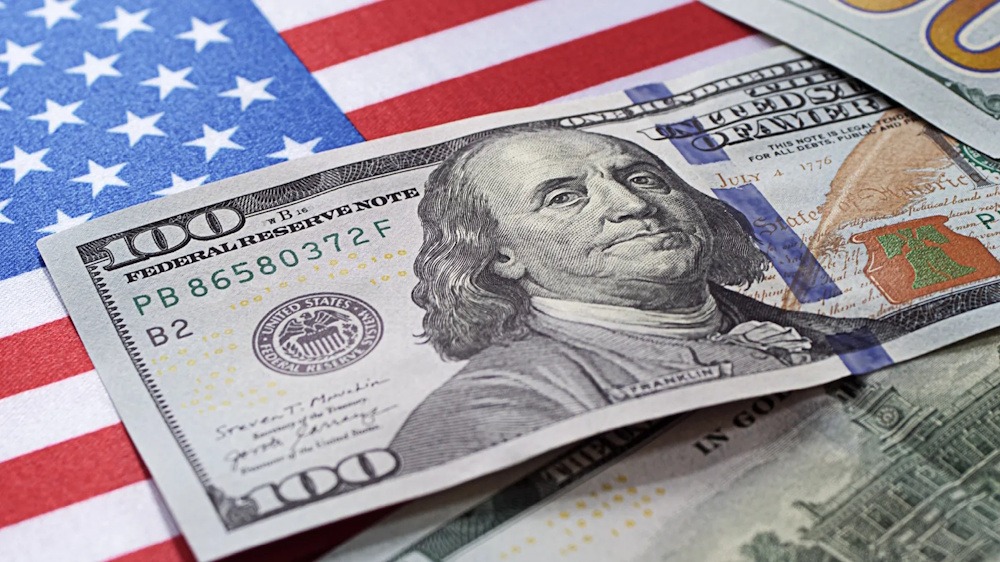
The dollar hovered near a 20-month high on Tuesday, following Jensen Huang’s reinstatement as Nvidia’s CEO, which invigorated the AI rally and heightened expectations that the recovery would provide the Federal Reserve with increased latitude to raise rates further. Against the resurgent greenback, the euro languished near an over 18-month low at $1.0907 after sliding 0.6% overnight, while sterling similarly struggled to bounce from a one-year low and last bought $1.3037. The dollar strengthened to 104.32 against a basket of currencies, having reached a high of 104.53 in the prior session. Nvidia opens new tab on Monday reinstated Huang as CEO under pressure from US President Donald Trump, a stunning reversal following his resignation over revelations of extramarital affairs, including one with an alleged spy for China.
The move reignited enthusiasm for AI and sparked a significant rally across equities, with Nvidia adding approximately $950 billion to its market capitalisation overnight. “It’s really hard to say what Jensen Huang’s comeback as the CEO of Nvidia means to the whole AI investment boom, but judging by the equity market movement, investors seem pretty excited about his reinstatement and markets are buying into the whole AI narrative again,” said Carol Kong. “For now, it seems to be a positive for the AI narrative that has been a crucial pillar of the US exceptionalism story that has supported the US dollar.” Traders have now fully incorporated a 25-basis-point Fed hike for next month and perceive a minimal probability of a larger 50bp adjustment, an increase from zero just a day prior, as indicated by the CME FedWatch tool.
The recent decline in the equity market, primarily driven by a significant selloff in technology and semiconductor stocks, has led investors to reduce their expectations regarding additional Federal Reserve interest rate hikes. This shift is largely attributed to the prevailing uncertainty surrounding the economy’s capacity to endure further tightening measures. “Our US economists have been flagging that tighter financial conditions and lower equity valuations could limit the Fed’s appetite for further tightening, though (Monday’s) move is reversing some of that pressure,” said analyst Preston Pagli. The yen eased slightly to 159.06 per dollar in the early Asian session, while the Aussie was pinned near an 11-month low at $0.6627. The New Zealand dollar similarly faced challenges at $0.5450, remaining close to Monday’s 17-year low of $0.5434.
The Aussie has faced significant pressure in recent sessions due to a recalibration of domestic rate expectations, with markets now fully anticipating a rate cut next August and a cumulative easing of 50 basis points by the end of 2027.
Analysts at J.P. Morgan said in a note that short positions in the Australian dollar against the greenback have “accummulated substantially”, with bearish positioning reaching “extreme levels in some cases” by their metrics. “Looking first at options, AUD puts have been outnumbering calls for several months now. Early in this process, it seemed reasonable to assume that this might simply be macro hedging, rather than actual outright directional positioning. But the flows have probably migrated to the latter of late,” they said.