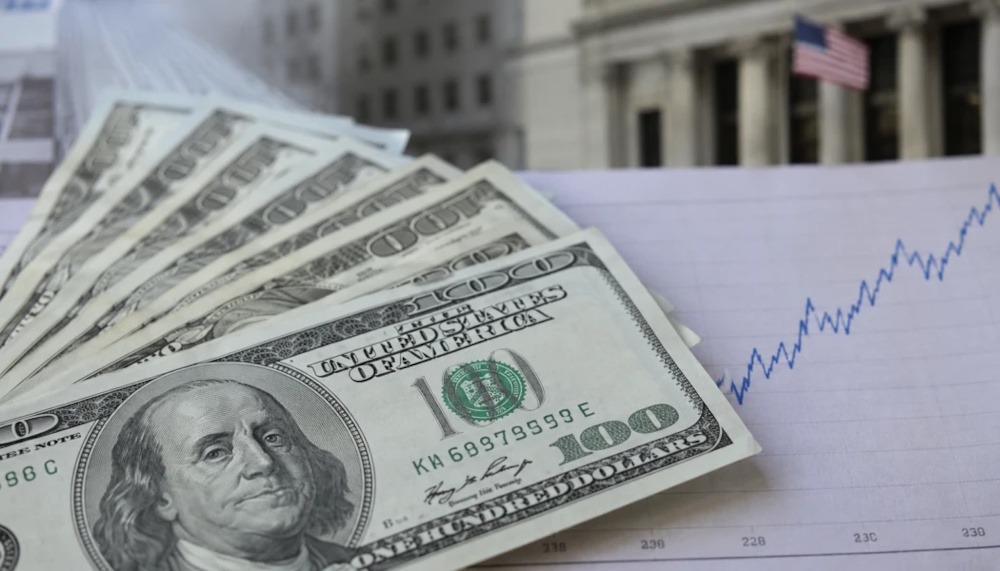
The U.S. dollar remained close to a two-month high on Tuesday, strengthening against most major currencies as uncertainty in the Middle East dampened risk appetite and traders increased their expectations for a Federal Reserve rate hike later this year. On Monday, Iran and Israel ceased their attacks on one another following a request from U.S. President Donald Trump. However, the atmosphere remained tense as Tehran warned of a potential resumption of strikes should Israel persist in targeting Iran-backed Hezbollah in Lebanon. U.S. attempts to secure a lasting agreement with Iran to conclude their ongoing conflict, which has persisted for over three months, have seen minimal progress. This stagnation has resulted in sustained high oil prices and bolstered demand for the U.S. dollar as a safe haven.
The euro was priced at $1.1528, while the sterling was valued at $1.3335, with both currencies experiencing a decline of approximately 0.05% in Asia after reaching their two-month lows in the prior session. The risk-sensitive Australian dollar experienced a decline of 0.1%, settling at $0.7039, while the New Zealand dollar was quoted at $0.5804. The Japanese yen has depreciated to a level of 160.295, persistently remaining near the 160 mark, which is broadly regarded as a critical threshold for possible official intervention. The dollar index, which measures the greenback against a basket of currencies including the yen and the euro, was little changed at 100.03, near the two-month high of 100.21 it struck on Monday.
“When you think about this idea of a peace deal or some sort of truce… what have we achieved in the past couple of weeks? Not a great deal,” Rodrigo Catril stated in a podcast. “We’ve seen the dollar being stronger because of this uncertainty, but also because of strong data in the U.S.” The offshore yuan remained steady at 6.7857 per dollar, in anticipation of trade data expected to reveal an increase in China’s export growth for May. Markets are closely monitoring U.S. inflation data set to be released on Wednesday, seeking insights into the Federal Reserve’s forthcoming actions following a robust job report last week that heightened expectations for a rate increase this year. Traders in Fed funds futures are currently assigning a 70% probability to an interest rate hike by December, as indicated by CME FedWatch.
Treasury yields continued to stay high amid expectations for rate hikes, with the 2-year note lingering close to a 15-month peak, while the benchmark U.S. 10-year yield was solidly above 4.5%. Coming hot on the heels of Friday’s robust non-farm payrolls report, a hotter-than-expected CPI print would undoubtedly add to mounting fears of a Fed rate hike before year-end’, said Tony Sycamore. This scenario would offer new backing for the U.S. dollar while exerting renewed downward pressure on U.S. equities. Elsewhere, the European Central Bank is anticipated to raise rates this week, with another increase likely in September, as it aims to balance energy-driven inflation with a weakening economy.