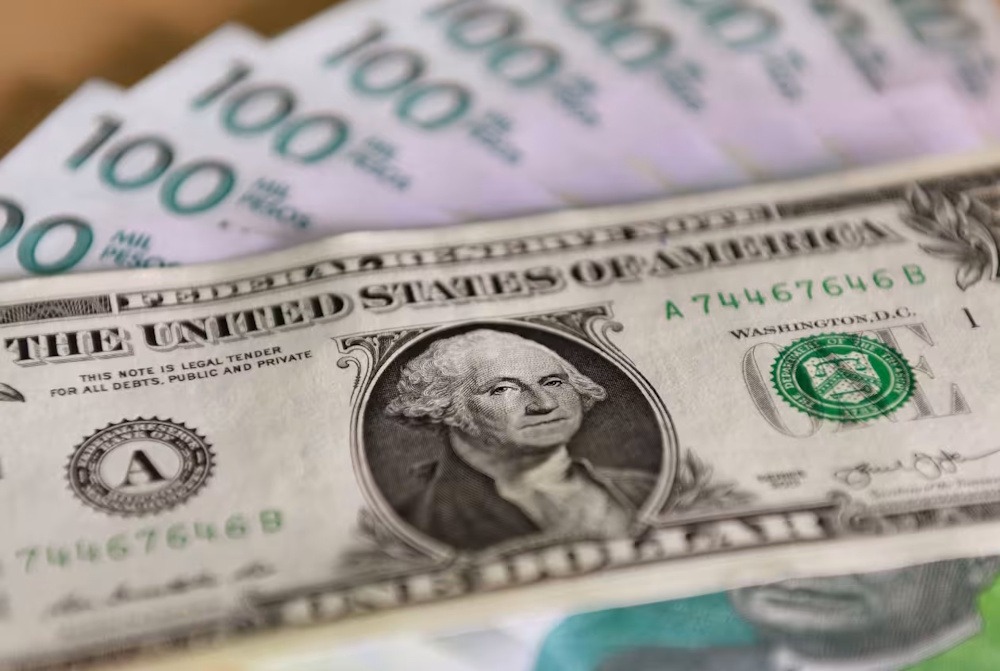
The dollar stood close to a two-month high on Monday following a strong U.S. jobs report that prompted traders to increase their expectations for a Federal Reserve rate hike this year, while the yen edged deeper into the intervention zone. Currency movements remained relatively subdued in contrast to the wider market, which experienced a significant decline in technology stocks throughout Asia. The dollar maintained its robust gains following the report indicating that nonfarm payrolls rose by 172,000 jobs last month, significantly surpassing expectations. Against the dollar, the euro declined to a two-month low of $1.1507, while sterling faced challenges at a three-week low of $1.33165.
The Australian and New Zealand dollars both declined to their lowest levels in two months, reaching $0.7016 and $0.5779, respectively. “The U.S. payrolls report released … illustrates a U.S. labour market that is gaining strength despite the persistent energy price shock,” stated Jonas Goltermann. That combination increases the likelihood of policy tightening by the Fed later this year. We now anticipate the FOMC will implement two 25-basis-point rate hikes later this year, in reaction to the energy supply shock and the re-acceleration of the U.S. labour market. Before the jobs report was published, traders were steadily increasing their positions on a potential Fed rate hike this year, given that the global energy crisis linked to the Iran conflict poses a risk of rising inflation. Israel announced that it targeted military installations in western and central Iran on Monday, despite reports indicating that U.S. President Donald Trump advised Israeli Prime Minister Benjamin Netanyahu to avoid additional strikes.
Markets are currently reflecting a greater than 70% likelihood that the Fed will implement a rate hike in December, a significant increase from the 45% probability observed just a week prior, as indicated by the CME FedWatch tool. Yen is currently experiencing significant volatility. The strength in the dollar has consequently resulted in increased pressure on the yen, which is currently valued at 160.34 per dollar. The Japanese currency has now reversed its gains achieved following Tokyo’s 11.7 trillion yen ($73.01 billion) intervention just over a month ago, as it fell to its lowest level since July 2024 at 160.725. Sources indicated that the BOJ is anticipated to increase interest rates this month, barring a significant escalation in the Middle East conflict that could disrupt markets, given that rising fuel costs from the energy shock are intensifying price pressures in the economy. “I believe this places us in a state of uncertainty regarding the yen, as the hike is essentially factored in,” stated Sim Moh Siong.
For the yen to gain additional advantages from rate-hike expectations, market participants will be closely monitoring whether the BOJ will indicate a quicker-than-anticipated trajectory for rate increases. In the realm of cryptocurrencies, bitcoin experienced an increase of over 1%, reaching $63,093.86, marking a recovery after a decline to its lowest point since October 2024 last week. Ether increased by over 3% to $1,679.40, after experiencing a decline to a 14-month low last week. Rising AI stocks and a lineup of promising new listings, including SpaceX, have attracted investment away from bitcoin, causing the leading cryptocurrency to face challenges since the beginning of the year.