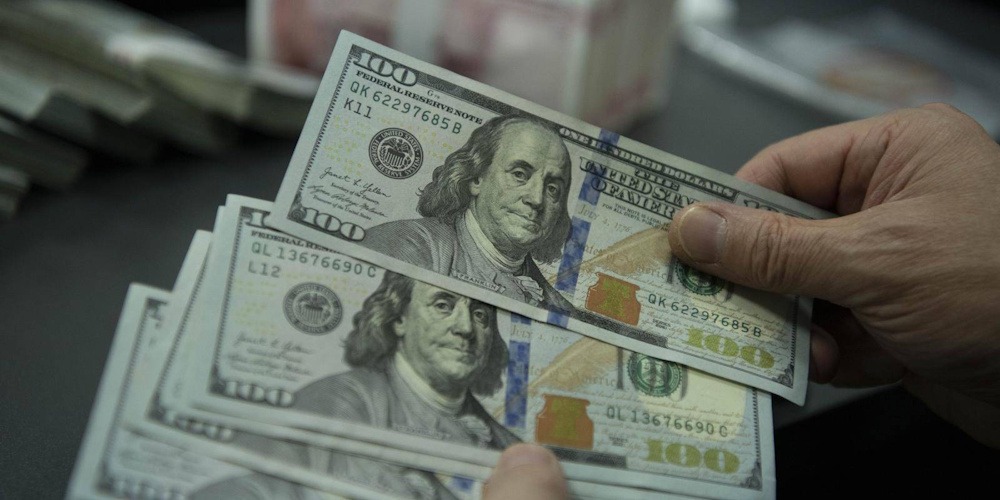
The dollar experienced a decline against the majority of major currencies on Wednesday following indications from the U.S. that a potential agreement with Iran could be on the horizon, while the yen persisted in its downward trend, approaching levels that have historically prompted intervention from Tokyo. President Donald Trump announced a temporary halt to an operation aimed at assisting ships in the Strait of Hormuz, referencing advancements in negotiations for a comprehensive agreement with Iran.
This statement followed U.S. Secretary of State Marco Rubio’s remarks on Tuesday, indicating that the United States has met its goals in the military campaign against Iran, and emphasized that there is “no desire for further escalation.” U.S. oil futures declined on Wednesday morning by more than $2 in response to Trump’s comments, with U.S. West Texas Intermediate dropping to around $100 per barrel. “The signals sent from the United States seem to provide reassurance that there is no intention to renew hostilities,” stated Kyle Rodda. Nonetheless, this situation is not entirely positive, as oil remains confined and the Strait continues to be closed, he noted. “This indicates that upward pressure on oil is likely to continue, potentially creating challenges for the markets in the future.”
The euro was positioned at $1.1714 while sterling was valued at $1.35685, with both currencies experiencing an increase of approximately 0.2% for the day thus far. The Australian dollar traded at $0.7208, reflecting an increase of nearly 0.4% in early trading, while the New Zealand dollar rose by 0.3% to $0.5905. The dollar index experienced a slight decline of 0.01%, settling at 98.299. The markets are preparing for the upcoming non-farm payrolls release later this week. This event will be a critical indicator of whether the economy can maintain its resilience, potentially allowing the Federal Reserve to keep its monetary policy unchanged, or if a weakening labor market might reignite discussions around interest rate cuts.
In relation to the yen, the dollar was positioned at 157.62 yen, reflecting a decrease of 0.17% from the previous U.S. levels. This remains significantly higher than last week’s intervention low, even with the recent decline in oil prices.
The recent shift indicates that the rebound is largely attributed to the lack of subsequent actions from Japanese authorities, according to insights.