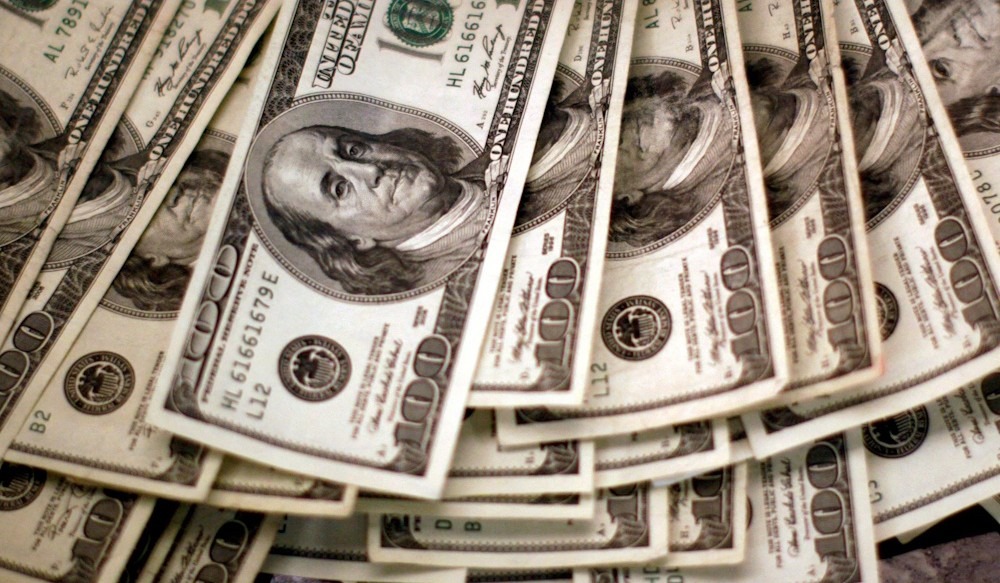
The dollar’s significant rally after U.S. strikes on Iran is providing reassurance to investors that the currency continues to serve as a global safe-haven. The greenback is regaining its typical crisis-era function as geopolitical tensions escalate in the Middle East. The resurgence of safe-haven interest follows an extended period of increasing uncertainty regarding the dollar’s inherent attractiveness in stressful situations, a skepticism that emerged when the currency did not strengthen during the global market downturn triggered by last year’s tariffs. On Monday, the U.S. dollar strengthened significantly, with the dollar index increasing by nearly 1%, marking its most favorable performance in seven months. “Today is, I would say, a classic risk-off day from a U.S. dollar perspective,” Eric Theoret stated. “I believe ‘Liberation Day’ marked a clear departure from the historical precedents we’ve seen,” he stated, alluding to the declaration of extensive U.S. tariffs on April 2, 2025, which initiated a significant downturn in global markets, notably affecting the dollar.
This is a positive development for the dollar, which has faced challenges to its long-standing position as a safe-haven asset from the euro, the yen, and gold in recent months. The depth and robustness of U.S. markets were advantageous for the dollar, as noted by analysts. “If you’re looking to de-risk and de-risk in size, the U.S. Treasury market is really the only one that can handle those flows,” Theoret said. During a crisis, an influx of global investors into Treasuries significantly increases demand for the dollar. Lack of alternatives to the dollar makes it challenging for investors to avoid it during periods of increased volatility, Don Calcagni, chief investment officer at Mercer Advisors in Denver, stated.”It doesn’t come as a surprise to me that the dollar continues to act as a safe-haven asset,” Calcagni stated. The plunge on Liberation Day has cast doubts on the dollar’s status as a safe haven. The plunge on ‘Liberation Day’ has cast doubts on the dollar’s status as a safe haven.
The dollar’s inability to attract safe-haven flows amid last year’s market turbulence was primarily due to the U.S. being the origin of the risk. Analysts noted that Washington’s tariff offensive initiated a global selloff, resulting in diminished investor appetite to seek refuge in the currency of the nation creating the uncertainty. US stocks concluded the day with a slight divergence following a turbulent session on Monday, as the Dow experienced a minor decline, “Liberation Day forced the USD’s centrality to diminish … investors started to favor the (rest of world),” Benjamin Ford said. “The oil shock has prompted global investors to retreat from positions they have pursued over the last three months, resulting in a net long position in USD,” Ford stated. According to John Velis the dollar’s safe-haven appeal may have faced challenges amid domestic concerns, but it remains robust during international geopolitical crises. Indeed, the data available at this time indicates that,” Velis stated. Nevertheless, there remains uncertainty among some regarding the dollar’s ability to consistently serve as a reliable safe haven under different conditions. “I believe today’s activity will provide some reassurance that the USD continues to exhibit safe-haven characteristics,” stated Jane Foley. “However, I believe the discussion is far from concluded,” she stated.
On Monday, the dollar found support not only from haven flows but also due to the U.S.’s position as a net energy exporter, which provides a buffer for the American economy against oil price shocks that often impact economies reliant on imports. Aaron Hurd expresses skepticism regarding the dollar’s performance in the event of a shock that is unrelated to energy or liquidity concerns. “If it’s just a general kind of economic fear, I think the dollar will be far less effective,” he said. Considering the significant fiscal deficits in the U.S., the fluctuations in policy, and the overall elevated global exposure to U.S. assets, Hurd anticipates that the dollar will, on average, exhibit a stronger correlation to risk assets during major shocks. In the short term, Macro Hive’s Ford observes that the trajectory of the dollar is contingent upon the movement of oil. “If we continue in this oil up, risk appetite down world, then USD will continue to find a bid,” he stated. Nonetheless, should oil prices decline, traditional safe-havens may re-emerge as prominent options,” Ford stated, noting that this situation could benefit the Swiss franc and the Japanese yen.