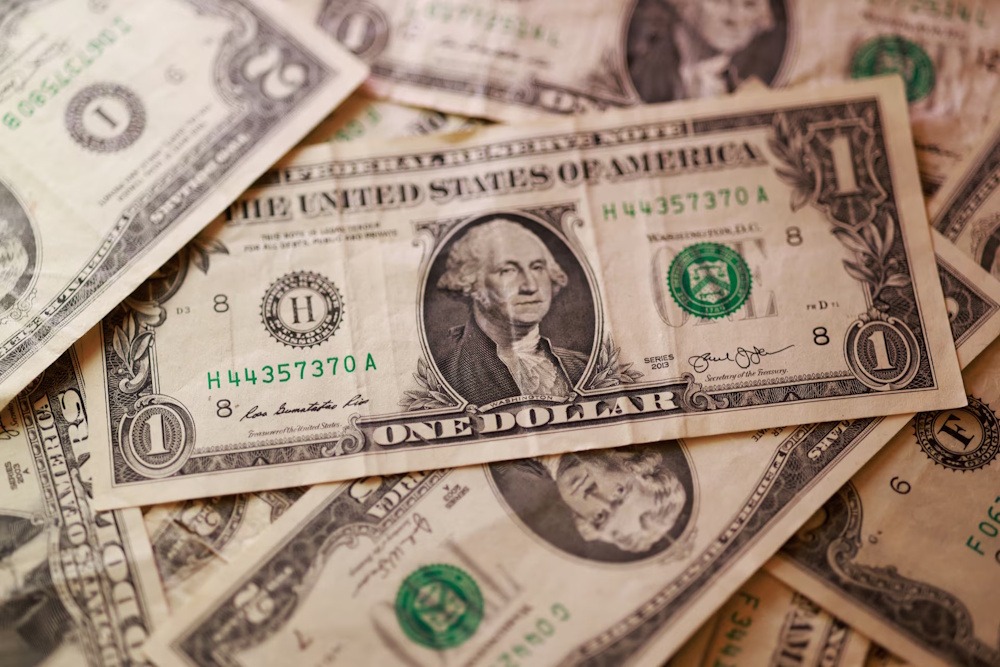
The U.S. dollar continued its ascent, achieving a new 13-month peak against a range of major currencies on Wednesday. This movement was driven by investors seeking refuge from a sell-off in tech stocks while also preparing for anticipated rate hikes by the Federal Reserve. A widespread decline in technology and semiconductor stocks has led to a decrease in global equities as investors capitalise on gains from an extended rally, resulting in increased demand for safe-haven assets such as the dollar and bonds. Meanwhile, expectations of a U.S. rate hike continued to build as Federal Reserve officials adopted an increasingly hawkish stance in light of the robust performance of the U.S. economy. Markets are currently assigning a 37% probability to a 25-basis-point increase at the July meeting, a notable rise from 8.5% just a week prior, and a 70% likelihood for September, up from 29.1%, as indicated by CME FedWatch.
The dollar index, which measures the greenback against a basket of currencies including the yen and the euro, climbed to a high of 101.44, the strongest level since May 13, 2025. “The U.S. dollar is still the preferred safe-haven,” remarked Ray Attrill. “Obviously the momentum is on its side at the moment, but I think there is a lot priced in,” he said. “We’ll have to see a correction in risk sentiment, one that’s broader rather than just the tech sector, or the market further ratcheting up its expectations for hikes, before the dollar can go very much higher from here.” The euro last traded at $1.1375, approaching a one-year low. The British pound weakened slightly to $1.3199, following comments from Bank of England policymaker Alan Taylor, who indicated that a “extended hold” on interest rates was the appropriate response to inflationary pressures.
The risk-sensitive Australian dollar remained stable at $0.6918 in anticipation of the forthcoming CPI reading later today. The New Zealand dollar experienced a decline of 0.05%, reaching $0.5665, marking a new seven-month low.
Additionally bolstering the demand for safe-haven assets, tensions between the U.S. and Iran have surfaced regarding key elements of their framework, particularly concerning nuclear matters and the governance of the Strait of Hormuz. This development casts doubt on the sustainability of their tenuous peace agreement. The Japanese yen last traded at 161.57 after briefly weakening to a two-year low of 161.93 late on Monday as the greenback extended its gains. A break above 161.96 would position the yen at its weakest level since 1986.
The most recent series of verbal warnings issued by Japanese officials has proven ineffective in alleviating the ongoing pressure on the currency, given the significant U.S.-Japan interest rate differentials and prevailing scepticism regarding Tokyo’s dedication to intervention. The Japanese yen could weaken to 165 per dollar if the Fed raises interest rates this year, according to Sayuri Shirai. Some members of the Bank of Japan’s board advocated for additional interest rate increases to align the central bank’s policy rate more closely with levels considered neutral for the economy, according to a summary of opinions from their June policy meeting released on Wednesday.