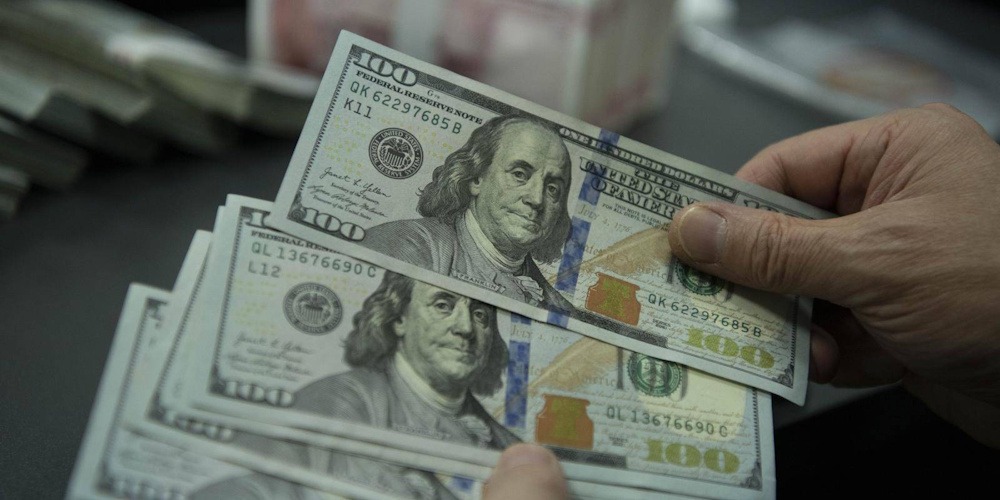
The U.S. dollar reached a 10-day low against its major counterparts on Monday, following a preliminary agreement aimed at concluding the conflict between the U.S. and Iran. This development led to a decline in oil prices and an increased appetite for riskier assets. U.S. and Iranian officials announced on Sunday that they have reached an agreement on a framework aimed at concluding their conflict, lifting the U.S. blockade on Iran, and reopening the Strait of Hormuz. The memorandum of understanding is set to be officially signed on Friday in Switzerland; however, caution remains as markets anticipate additional details, while the future of Iran’s nuclear program is subject to further negotiations. Oil prices experienced a decline, as Brent crude futures fell over 4% to $83.82.
Concurrently, the safe-haven dollar softened amid diminishing geopolitical tensions and concerns regarding inflation. The euro stood at $1.1601, reflecting a 0.3% increase thus far in Asia, while sterling appreciated by 0.2% to $1.3434. The Australian dollar, sensitive to risk factors, traded at $0.7079, reflecting an increase of 0.6%. Meanwhile, the kiwi rose by 0.4%, reaching $0.5854. The dollar index, which measures the greenback against a basket of currencies including the yen and the euro, was largely flat at 99.55 after hitting its weakest level since June 5 in earlier trades. “I think we’ll see the dollar fall over the course of the next few sessions. We’ll probably see some of the risk currencies like Aussie and yen appreciate a little bit. But I don’t think we’re going to see any huge moves,” said Nick Twidale. There will be considerable observation regarding the speed at which the strait reopens and the duration required for oil flows to return to their typical levels. It is undoubtedly going to take months instead of weeks.
The Japanese yen weakened to as much as 160.225, continuing to hover around the 160 level widely seen as a line in the sand for potential official intervention. Major central banks, including the Federal Reserve, the Bank of Japan, and the Reserve Bank of Australia, are set to announce their rate decisions this week. Market participants are keenly observing whether the potential for a peace deal will alleviate inflation worries and impact the ongoing tightening path. The Federal Reserve is anticipated to maintain rates within the existing range of 3.5%-3.75% on Wednesday. However, the focus will be on the policy statement and press conference for insights into the signals from new chair Kevin Warsh. Investors have reduced their expectations for a rate hike this year, now pricing in approximately a 50% likelihood of a move in December, a decrease from over 70% just a week prior, as indicated by the CME FedWatch Tool.
“Negotiations on aspects of the deal are ongoing, but no doubt central bankers will be breathing a sigh of relief, for now at least, that the upside risks to inflation appear to be receding and not becoming the central scenario,” said Prashant Newnaha. The Reserve Bank of Australia is anticipated to maintain interest rates at 4.35% on Tuesday, following three increases this year. The Bank of Japan is poised to increase interest rates to 1%, marking a 31-year peak, during its two-day meeting that wraps up on Tuesday. It is also anticipated to indicate a willingness to continue increasing borrowing costs to address inflation risks, notwithstanding the peace agreement.