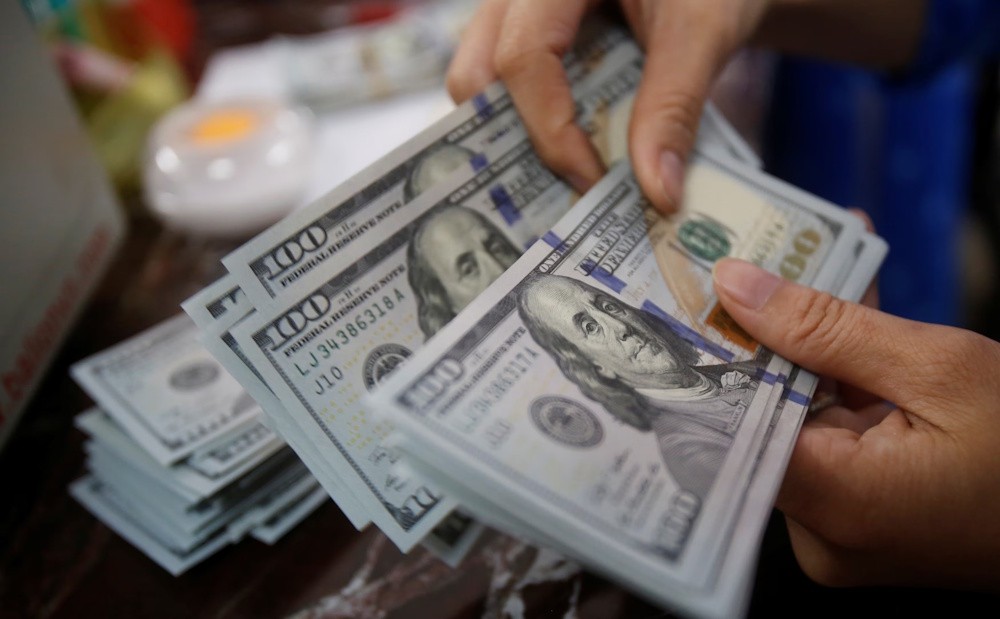
The dollar strengthened against most major currencies on Monday as renewed tensions in the Middle East pushed oil prices higher and a global bond selloff reduced risk appetite, while the weakness of the yen kept traders vigilant for potential Japanese intervention. The euro was last quoted at $1.1609, while sterling was valued at $1.3305, with both currencies experiencing a decline of over 0.1%. The Australian dollar, sensitive to risk, declined by 0.4% to $0.7121, whereas the New Zealand dollar remained relatively stable at $0.5827. The dollar index, reflecting the performance of the greenback against a selection of major currencies, showed a slight increase at 99.393.
On Monday, oil prices experienced an increase, as Brent crude futures surged by more than 1%, surpassing $110 a barrel. This uptick followed an attack on a nuclear power plant in the United Arab Emirates, coinciding with a perceived halt in efforts to resolve the ongoing U.S.-Israeli conflict with Iran. According to a note from Barclays, it seems that the environment for risk and bonds is worsening, while the circumstances for a continued dollar rally this week are favorable. Indicators suggest that the Strait of Hormuz may continue to experience congestion, contributing to upward pressure. It has been noted that the dollar appreciates by 0.5% to 1% for each 10% increase in oil prices.
A global bond rout has negatively impacted risk sentiment, demonstrating minimal signs of recovery, as Treasury yields remain high due to concerns that energy disruptions in the Middle East could exacerbate inflation. The yields on benchmark U.S. 10-year notes and the two-year notes, which generally align with interest rate expectations for the Federal Reserve, were last recorded at 4.607% and 4.085%, respectively, approaching their peak in a year. “In the near term, the USD could maintain a stronger position on dips if yields stay elevated and markets keep adjusting to a more hawkish Fed reaction function,” stated Christopher Wong in a note.
This week, attention will shift to the minutes from the Federal Open Market Committee and the U.S. flash Purchasing Managers’ Indexes. These reports may provide insights into the Federal Reserve’s concerns regarding ongoing inflation and the resilience of U.S. economic activity amid tighter financial conditions, he noted. Against the yen, the dollar traded at 158.84, reflecting a 0.04% increase from late U.S. levels. The renewed weakness of the yen has prompted investors to remain vigilant regarding potential intervention. The offshore yuan was quoted at 6.8163 yuan per dollar in anticipation of Chinese activity data set to be released later on Monday.