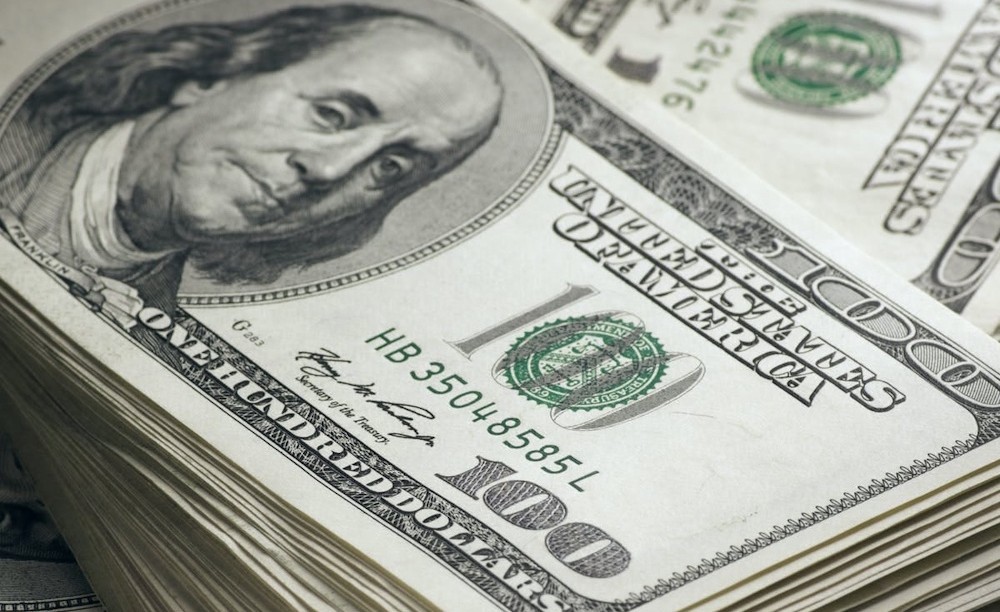
A challenging year for the U.S. dollar is concluding with indications of stabilization; however, numerous investors anticipate that the currency’s downward trend will continue next year as global growth accelerates and the Fed implements further easing measures. The U.S. dollar has experienced a decline of over 9% this year against a basket of currencies, marking its worst performance in eight years. This downturn is largely attributed to expectations surrounding Federal Reserve rate cuts, diminishing interest rate differentials with other major currencies, and rising concerns regarding U.S. fiscal deficits and political uncertainty. Market participants widely anticipate a continued depreciation of the dollar, given that other prominent central banks are either maintaining their current stance or implementing tighter policies. Additionally, the transition to a new Fed Chair is projected to signal a shift towards a more accommodative approach for the central bank. The dollar generally declines when the Fed reduces rates, as decreased U.S. interest rates render dollar-denominated assets less appealing to investors, leading to a drop in demand for the currency. “The reality is we still do have an over-valued U.S. dollar from a fundamental standpoint,” Karl Schamotta said.
Understanding the dollar’s trajectory is crucial for investors, considering the currency’s pivotal role in the realm of global finance. A weaker dollar enhances U.S. multinational earnings by elevating the value of overseas revenues when converted back to dollars, while also making international markets more appealing by offering an FX advantage that surpasses the performance of the underlying assets. In light of the dollar’s recent recovery, with the dollar index rising 2% from its September low, FX strategists continue to uphold their projections for a weaker dollar in 2026, according to a Reuters survey conducted from Nov. 28 to Dec. 3. The dollar’s real broad effective exchange rate, which reflects its value against a diverse array of foreign currencies while accounting for inflation, was recorded at 108.7 in October. This marks a minor decrease from the peak of 115.1 observed in January, indicating that the U.S. currency continues to be overvalued, as per data from the Bank for International Settlements. The line chart illustrates that the recent pullback this year has minimal impact on the currency’s elevated valuation, which is supported by a sustained multi-year surge. The line chart illustrates that the recent pullback this year has minimal impact on the currency’s high valuation, which is supported by a sustained multi-year increase.
Anticipations regarding the dollar’s decline are contingent upon the alignment of global growth rates, with the U.S. edge projected to diminish as other significant economies accelerate.”I believe the distinction lies in the fact that the global economy is poised for greater growth in the coming year,” stated Anujeet Sareen. The Dow decreased by approximately 0.6%, while both the S&P 500 and Nasdaq experienced a decline of around 0.75% each. According to investors, Germany’s fiscal stimulus, China’s policy support, and enhanced growth trajectories in the euro zone are anticipated to diminish the U.S. growth premium that has bolstered the dollar in recent years.”When the rest of the world is starting to look better in terms of growth, that’s favorable for the dollar to continue to weaken,” stated Paresh Upadhyaya, director of fixed income and currency strategy at Amundi, the largest European asset manager. Even investors who are optimistic that the worst of the dollar’s decline has passed acknowledge that any significant setback to U.S. growth could impact the currency.”If you see any weakness at any point next year, that could probably be bad for markets, but that could definitely affect the dollar too,” said Jack Herr. Anticipations surrounding the Fed’s potential rate cuts, in contrast to the stance of other prominent central banks that are either maintaining or increasing rates, may exert downward pressure on the dollar. The Federal Reserve, exhibiting significant division among its members, implemented an interest rate cut in December. The prevailing outlook among policymakers suggests the possibility of an additional reduction of a quarter-of-a-percentage-point in the upcoming year.
As Jerome Powell prepares to transition out for President Trump’s forthcoming Fed chair selection, the market might begin to factor in a more lenient central bank in the upcoming year, considering Trump’s advocacy for reduced interest rates. Several of the known finalists for the Chair position, including White House economic adviser Kevin Hassett, former Fed Governor Kevin Warsh, and current Fed Governor Chris Waller, have expressed support for interest rates to be lower than their current levels.”Although the market expects limited action from the Federal Reserve next year, we believe the trend is toward lower growth and weaker employment,” stated Eric Merlis. In the meantime, market participants believe the European Central Bank will maintain stable rates in 2026, although a rate increase cannot be entirely dismissed. The ECB maintained its policy rates at the December meeting and adjusted some of its growth and inflation forecasts upward. Despite longer-term perspectives indicating dollar weakness, investors have advised that a short-term recovery for the dollar should not be dismissed. Ongoing investor enthusiasm for artificial intelligence, along with the subsequent capital inflows into U.S. equities, may offer short-term support for the dollar. The increase in U.S. growth resulting from the government’s reopening following this year’s shutdown, along with the tax cuts enacted this year, may elevate the dollar in the first quarter, according to Sareen.”However, we are led to believe that this is probably not a persistent factor influencing the dollar throughout the year,” he stated.