
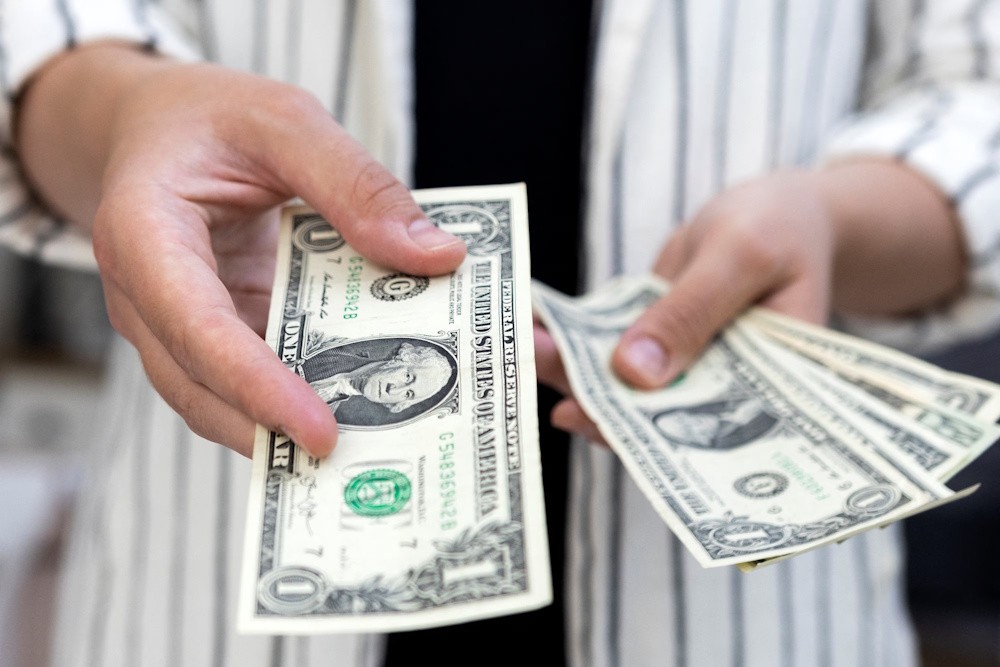
U.S. President Donald Trump stated on yesterday that the value of the dollar was “great” when questioned about whether he believed it had depreciated excessively, contributing to the downward pressure on the greenback, which reached a four-year low. The recent decline of the dollar can be attributed to several factors: the anticipation of ongoing rate cuts by the Federal Reserve, uncertainty surrounding tariffs, policy fluctuations that include concerns over the independence of the Fed, and increasing fiscal deficits. These elements have collectively diminished investor confidence in the stability of the U.S. economy. A weaker dollar may provide advantages for U.S. exporters, although Trump indicated that he is not aiming for a further decline in its value.”I would want it to… just seek its own level,” he stated.
Trump addressed reporters in Iowa prior to a speech anticipated to focus on economic issues, aiming to energize his loyal rural base in a state that is crucial for the upcoming congressional elections in November. “No, I think it’s great, the value of the dollar … dollar’s doing great,” Trump stated in response to a reporter’s inquiry about whether he believed the dollar had depreciated excessively. Following Trump’s comments, the dollar index, which gauges its strength against a selection of six major currencies, experienced intensified losses, reaching a session low of 95.566, marking the lowest point since February 2022.”If you examine China and Japan, I used to argue fiercely with them, as they consistently aimed to devalue,” Trump stated.
His remarks followed a prolonged phase of decline in the dollar. The dollar has faced pressure in recent sessions as traders prepared for a potential coordinated currency intervention by U.S. and Japanese authorities aimed at supporting the weak yen. The yen experienced a notable increase of up to 4% in the last two sessions, driven by discussions regarding potential rate checks by the U.S. and Japan, which are typically viewed as a signal for possible official intervention. “FX market participants are always looking for a trend to jump on,” stated Steven Englander. “Typically, authorities resist sudden fluctuations in currency values; however, when the President shows a lack of concern or even supports such changes, it encourages sellers of the USD to continue their actions.” The decline of the dollar indicates investor concerns regarding the robustness of the U.S. economy, potentially resulting in inflationary pressures from increased import costs; however, it may also benefit certain businesses. A declining dollar facilitates the conversion of foreign profits into dollars for multinational corporations, while enhancing the competitive edge of U.S. exporters’ offerings.
A depreciating U.S. dollar alleviates the financial pressure on foreign nations and companies holding dollar-denominated debt, as they require a smaller amount of their local currency for repayment. “The administration seeks a weaker dollar,” stated Eugene Epstein, head of trading and structured products at Moneycorp in New Jersey, noting that it also aids in enhancing the trade deficit. Epstein emphasized that the president is clearly demonstrating concern for the trade deficit.