
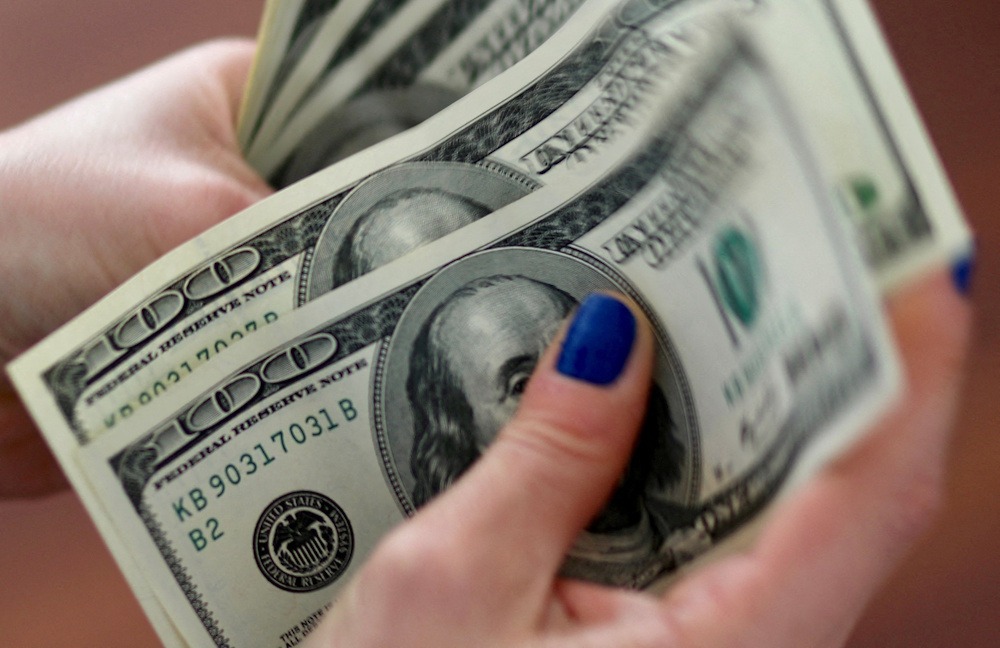
The dollar continued to exhibit instability on Thursday following widespread declines, as investors cautiously evaluated the likelihood of a tenuous two-week ceasefire between the United States and Iran maintaining its integrity. The ceasefire deal seemed precarious, with Israel maintaining its concurrent military actions against the Iran-aligned militia Hezbollah in Lebanon. Meanwhile, Tehran accused both Israel and the U.S. of breaching the agreement, asserting that moving forward with peace talks would be “unreasonable.”
The Strait of Hormuz continues to be closed to vessels operating without a permit, leading shippers to indicate that they will wait before resuming transit, which is contributing to an increase in oil prices. “There are probably some doubts emerging over whether the ceasefire expectations can really be sustained — or whether a ceasefire can even be finalized in the first place,” said Sho Suzuki. The dollar index, which assesses the greenback against a selection of currencies such as the yen and the euro, experienced a slight decline of 0.01%, settling at 99.05. The euro increased by 0.01% to $1.1663, while sterling rose by 0.01% to $1.3393. The yen retraced some of the gains made the previous day after the announcement of a truce in the Middle East conflict, declining 0.13% against the dollar to 158.8 per dollar. As the situation in the Middle East extends, there appears to be a perspective that fiscal policy may shift towards a more expansionary stance once more. “That, in turn, is contributing to yen weakness,” Suzuki stated.
The overnight indexed swap market indicates a 55% probability of an interest rate increase in the Bank of Japan’s forthcoming meeting later this month, according to data from money market broker Tokyo Tanshi. Should the ceasefire fail, projections for the rate hike in April may begin to diminish, potentially resulting in a depreciation of the yen, Suzuki stated. “The rate hike is contingent on the developments in Iran, which suggests that the BOJ may prefer to postpone their decision until the final moments leading up to the meeting to evaluate the situation,” Suzuki stated. BOJ Governor Kazuo Ueda is anticipated to present in the parliament at 0415 on Thursday. The U.S. dollar has emerged as the primary beneficiary among currencies due to the Iran War, partly because the U.S. stands as a net energy exporter, making it less vulnerable to the economic repercussions that oil importers such as Japan and various European nations may encounter. The five-week conflict has unsettled investor confidence, resulting in the most significant disruption to global oil and gas supplies ever recorded.
The current situation results in Iran possessing increased influence over shipping in the crucial strait compared to prior to the conflict, as experts indicate, following President Donald Trump’s decision to retract his threats against Iran’s civilian infrastructure. On Thursday, the U.S. will announce February personal spending figures along with the PCE deflator data. Despite improved sentiment following the ceasefire agreement, the dollar-yen pair may remain range-bound in Tokyo trading. However, strong U.S. data could trigger a rebound in the dollar, according to Akihiko Yokoo in a note. The Australian dollar experienced a decline of 0.13% against the US dollar, settling at $0.7033. New Zealand’s kiwi appreciated by 0.07% against the US dollar, reaching a value of $0.5826.