
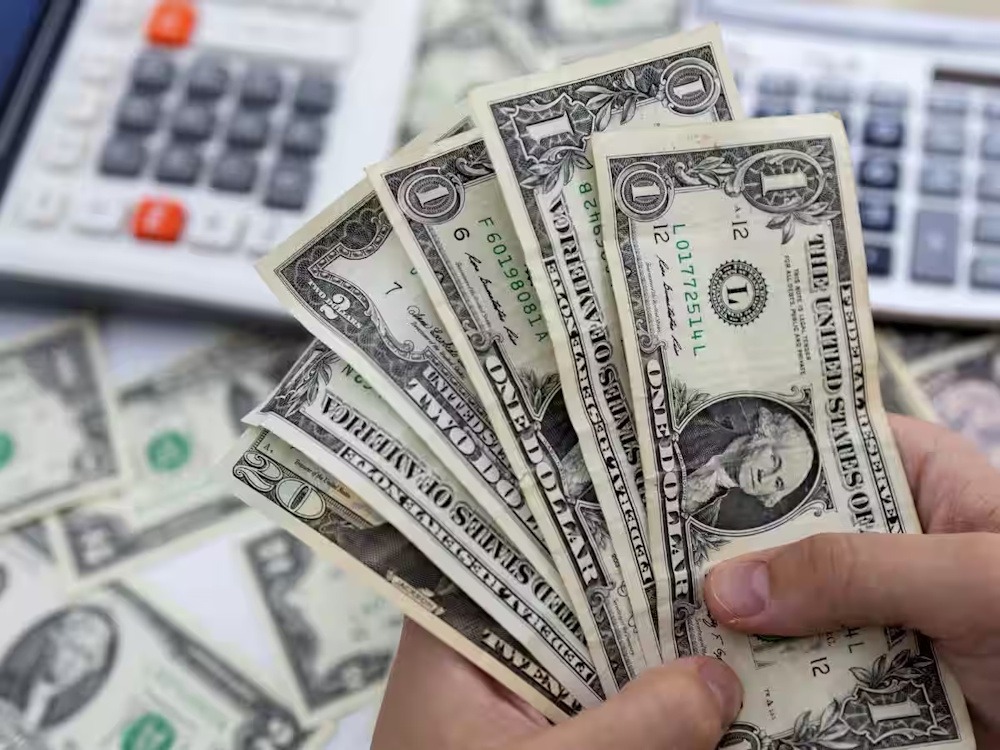
The dollar started the day at a disadvantage during the Asian trading session on Thursday, as stronger-than-anticipated earnings from Nvidia enhanced investor confidence, while markets looked forward to updates regarding the latest U.S. tariffs on foreign imports. The U.S. dollar index, which gauges the greenback’s strength against a basket of six currencies, maintained losses from Wednesday’s session, slipping to 97.592 as uncertainty lingered regarding U.S. President Donald Trump’s response to the Supreme Court’s ruling on February 20 that invalidated his emergency tariffs. The U.S. tariff rate for certain countries is set to increase to 15% or more from the recently established 10%, according to U.S. Trade Representative Jamieson Greer on Wednesday, without specifying any particular trading partners or providing additional information.
President Trump’s 2026 State of the Union address concentrated on economic matters yet offered minimal insights into new policy initiatives,” noted analysts. The U.S. Trade Representative “offered no details regarding how the higher tariff will be applied in situations where it breaches U.S. trade deals.” Investor confidence received a significant uplift as AI industry leader Nvidia forecasted first-quarter revenue exceeding market expectations on Wednesday. This development provided renewed momentum for stocks, allowing them to extend their tech-driven rally and reach two-week highs. However, the stock pulled back from its gains in after-hours trading, with U.S. equity futures drifting lower. The yen was last observed at 156.045, reflecting a 0.2% increase against the dollar, recovering some of the ground it lost after reaching its lowest levels in two weeks on Wednesday.
Bank of Japan Governor Kazuo Ueda indicated that the central bank will carefully evaluate data during its March and April meetings to determine the possibility of raising interest rates, as reported, thereby keeping the option for a near-term rate hike on the table. The yen experienced a recovery from its previous weakness on Wednesday, following the Japanese government’s appointment of two academics known for their strong support of economic stimulus to the central bank’s board. Further efforts from the Takaichi government to influence the BOJ pose a risk of renewed turmoil in Japan’s bond and currency markets, according to analysts. “However, we believe that the core fundamentals indicate ongoing stabilization in the JGB market and a recovery in the yen. The yield on the U.S. 10-year Treasury bond increased by 0.2 basis points, reaching 4.048%. The consensus among financial markets suggests that U.S. interest rates are unlikely to change at the upcoming Federal Reserve meeting.
The implied probability of 98% suggests that the U.S. central bank is expected to maintain its current interest rates during the upcoming two-day meeting on 18 March, reflecting minimal change from the previous day, as indicated by the CME Group’s FedWatch tool. In offshore trade, the U.S. dollar remained unchanged against the Chinese yuan at 6.854 yuan, marking the strongest levels for the Chinese currency in three years. The euro remained steady at $1.1815, and the British pound showed minimal movement at $1.3555. The Australian dollar remained stable at $0.7127, whereas the New Zealand dollar momentarily dipped under the $0.60 threshold against its U.S. counterpart before bouncing back, ultimately trading flat at $0.6001.