
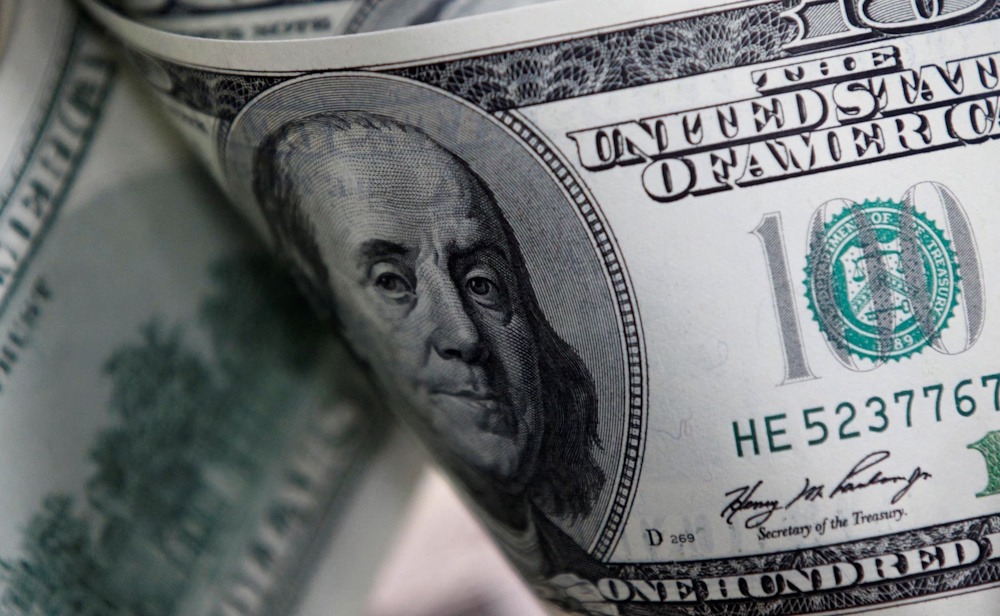
The dollar surged against other major currencies in light trading late on Sunday, as investors turned to the relative safety of the U.S. currency following protracted discussions between Washington and Tehran that did not result in a peace agreement, pushing markets into a seventh week of uncertainty. On Sunday, President Donald Trump announced that the U.S. Navy would initiate a blockade of the Strait of Hormuz, a critical passage for 20% of the world’s daily energy supplies, which Iran has effectively shut down since the onset of the war in late February. That has resulted in a more than 30% increase in oil prices, raising concerns about a potential widespread rise in inflation.
The dollar, serving as a safe haven due to the United States’ limited exposure to imported energy-price inflation, strengthened as Asian markets commenced trading. Consequently, the euro declined by 0.53% to $1.1663, while the dollar gained 0.1% against the Japanese yen, trading at 159.43. On April 7, the U.S. and Iran declared a two-week ceasefire, a development that prompted investors to respond positively by selling oil and reallocating some capital into risk assets like stocks. Concerns regarding the deal’s fragility have led to the unwinding of certain trades. This represents a complete reversal of any optimism as we approach the peace talks, particularly regarding the dollar’s role as a safe haven; oil prices are surging while there is a sell-off in other assets,” said market analyst Fiona Cincotta.
Conversely, there have been instances where the markets have displayed excessive reactions. In this scenario, the market appears to be having difficulty accurately pricing it due to the significant uncertainty and numerous unknowns involved. More risk-sensitive currencies, including the Australian dollar and sterling, experienced significant pressure, declining by 1.1% and 0.5%, respectively. As anticipation grows for a rebound in inflation, market participants have factored in the likelihood that various central banks, including the European Central Bank and the Bank of England, may opt to increase interest rates this year.
This marks a significant shift from earlier expectations, which suggested that borrowing rates would either stay the same or decrease. Global equities closed last week at their highest levels since early March, supported by optimism regarding potential resolutions between the United States and Iran. However, they remain 2% below the levels seen before the onset of the conflict.