
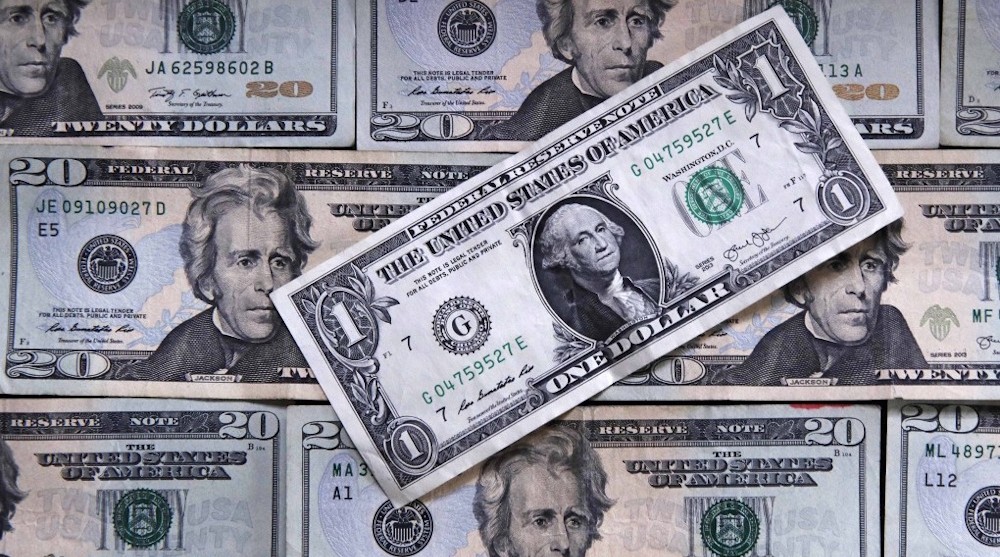
The dollar maintained its strength on Friday, positioning itself for a second consecutive weekly increase since the onset of the conflict in Iran, as market turmoil rendered it the sole safe-haven asset available. The euro hovered close to its lowest point since November, while the yen reached levels that prompted traders to remain vigilant for potential intervention by Japanese authorities. Amid rising oil prices, the U.S. has authorized the sale of certain Russian petroleum products that were previously sanctioned in response to Moscow’s actions in Ukraine. Iran has intensified its assaults on oil and transport infrastructures throughout the Middle East, with its newly appointed Supreme Leader Mojtaba Khamenei pledging to maintain the closure of the Strait of Hormuz shipping lane.
Currently, the market’s attention has shifted. It’s no longer about diversification; the emphasis is on inflation and reduced growth,” stated Gavin Friend. “The combination, the detrimental combination, of rising inflation and declining growth will persist the longer this entire crisis remains with us.” The dollar index, which assesses the greenback relative to a collection of currencies, has attained its peak since November. This surge can be attributed not only to its safe-haven allure but also to the fact that the United States is a net energy exporter. The index decreased by 0.04% to 99.63 during early trading in Asia, setting the stage for a 0.8% increase this week. The euro experienced an increase of 0.13%, reaching a value of $1.1525.
The yen appreciated by 0.17% to 159.08 per dollar, following a dip to 159.43 on Thursday, marking its lowest point since January 14. Sterling increased by 0.11%, reaching $1.3356. The U.S. government announced on Thursday the issuance of a new general license concerning Russia, permitting the sale of Russian crude oil and petroleum products loaded onto vessels until April 11, as stated on the Treasury Department’s website. The Trump administration has expended “years” of essential munitions since the onset of the war, according to the source. In Western Iraq, the U.S. is engaged in rescue operations following the crash of a military refueling aircraft. U.S. Central Command has stated that this incident was not caused by hostile or friendly fire. The IEA on Wednesday made the decision to release a substantial 400 million barrels of oil from strategic stockpiles. This amount would only account for approximately 20 days of supply lost as a result of the disruptions along the Strait of Hormuz, and it will take weeks or even months to make its way to the markets.
Market participants are closely monitoring the upcoming meetings at the Federal Reserve and the European Central Bank next week to assess how decision-makers will respond to the potential for an energy-price shock. On Thursday, the swaps market indicated that traders anticipate the European Central Bank may increase rates potentially as early as June. In contrast, the U.S. Federal Reserve is now expected to hold off on rate cuts until September, a shift from earlier expectations of July, based on data gathered by LSEG. The Australian dollar appreciated by 0.14% against the US dollar, reaching $0.7084, whereas New Zealand’s kiwi saw a slight increase of 0.05%, settling at $0.5858.