
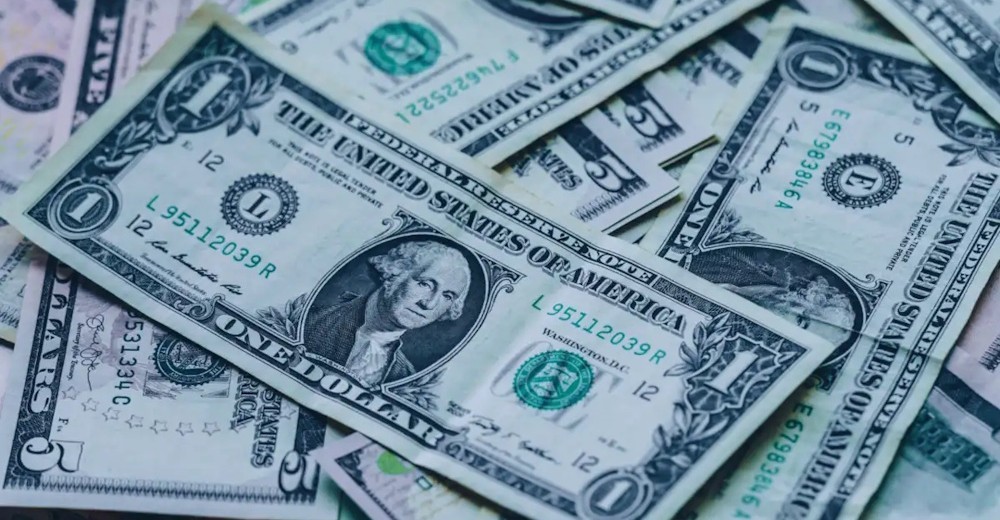
The U.S. dollar was on track for its worst annual performance in over twenty years on Wednesday, as investors anticipated that the Federal Reserve would have the capacity to lower rates further next year, even while some of its counterparts appeared poised to increase them. The greenback remained weak during Asian trading, as a strong U.S. GDP report did not influence the rate outlook, leading investors to anticipate about two additional Fed cuts in 2026. “We expect the FOMC to compromise on two more 25 bp cuts to 3-3.25% but see the risks as tilted lower,” said David Mericle.
The dollar declined to a 2-1/2-month low of 97.767 against a basket of currencies and is poised to experience a 9.9% loss for the year, marking its most significant annual drop since 2003. The dollar has experienced a turbulent year, affected by President Donald Trump’s unpredictable tariffs that triggered a crisis of confidence in U.S. assets earlier this year, while his increasing influence over the Fed has also led to worries about its independence. “The USD risk premium widened in December which suggests USD weakness may reflect growing concerns around Fed independence, not just the monetary policy outlook,” analysts noted in a currency outlook report.
“With many other G10 central banks on hold, we believe that Fed liquidity operations and a slightly dovish Fed bias suggest a downside tilt for the USD outlook.” In contrast, the euro, which rose to a three-month high of $1.1806, is up just over 14% for the year thus far, positioning it for its best performance since 2003. The European Central Bank maintained its current rates last week and adjusted some of its growth and inflation forecasts upward, a decision that likely rules out any further easing in the near future. Market participants have reacted by factoring in a slight possibility of stricter policy in the upcoming year, reflecting similar sentiments for Australia and New Zealand, where anticipated actions are viewed as increases. That has in turn lifted the two Antipodean currencies, with the Australian dollar up 8.4% to date, scaling a three-month peak of $0.6710 on Wednesday. The New Zealand dollar reached a 2-1/2-month high of $0.58475, reflecting a 4.5% increase for the year to date. Sterling reached a three-month high of $1.3531 and has increased over 8% year-to-date. Market participants are anticipating that the Bank of England will implement at least one rate reduction in the first half of 2026, assigning approximately a 50% probability to a second cut before the end of the year. The current emphasis in the foreign exchange market is on the yen, as traders remain vigilant regarding the potential for intervention by Japanese authorities to halt the currency’s decline.
On Tuesday, Finance Minister Satsuki Katayama stated that Japan has the flexibility to address excessive yen fluctuations, delivering the most robust warning yet regarding Tokyo’s willingness to intervene. Her remarks halted the yen’s declines, with the Japanese currency last 0.4% stronger at 155.60 per dollar on Wednesday, having risen more than 0.5% in the previous session. “Moves that are out of line with any observable fundamentals, and year-end trading conditions are a compelling backdrop for intervention and the risk of action over the holiday season is significant,” said Kit Juckes. On Friday, the Bank of Japan implemented a long-anticipated rate hike. However, this decision had been clearly communicated in advance, and remarks from Governor Kazuo Ueda left some market participants disappointed, as they had hoped for a more aggressive stance. Consequently, the yen experienced a decline following the announcement. That has left investors watchful for official yen-buying from Tokyo, especially as trading volumes decrease towards the year-end, which experts suggest would create a favorable moment for authorities to act.