
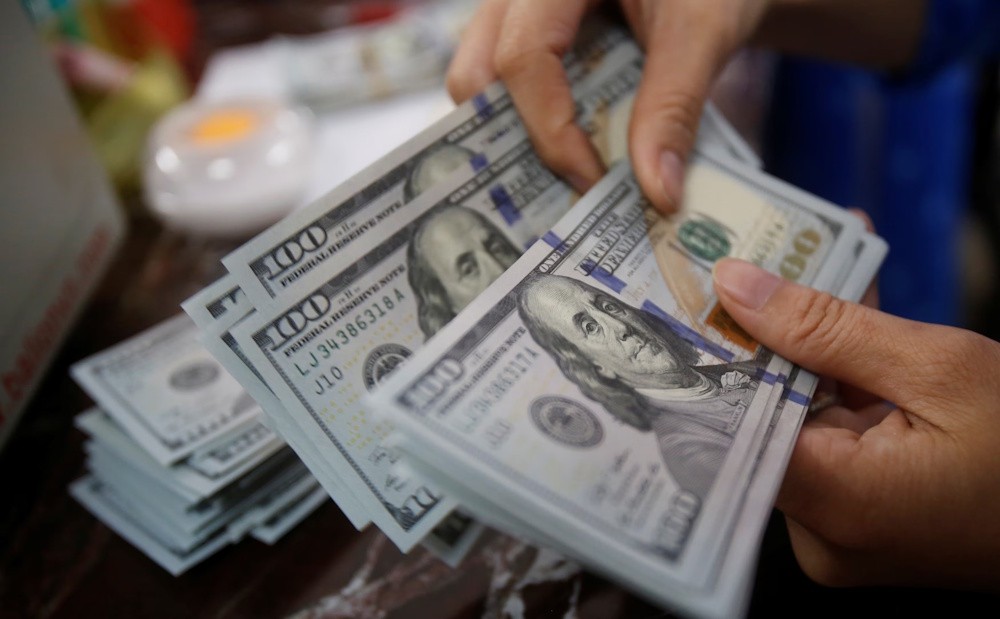
The U.S. dollar weakened on yesterday, as data indicating robust growth in the world’s largest economy did not alter the prevailing sentiment on a currency facing pressure from anticipated Federal Reserve interest rate cuts next year. The report reinforced expectations that the Fed will refrain from reducing rates at its late January meeting, with current odds standing at 87%, based on estimates. U.S. rate futures currently anticipate that the next policy easing from the U.S. central bank will take place in June, with two quarter-percentage-point reductions factored in for 2026. “We could see a lower dollar next year at least in the first quarter because the Fed is going to be increasingly forced to admit that the labor market is not in a good place,” said Erik Bregar.
“The Fed may be compelled to make some concessions (on rate cuts), even more than they have to date.” The market is seeking reductions. “And the odds are that we’re going to get a dovish Fed chair that will try to make that happen.” The latest estimate from the Commerce Department’s Bureau of Economic Analysis indicated that U.S. gross domestic product increased at an annualized rate of 4.3% in the last quarter. Analysts had predicted GDP would increase at a 3.3% rate in the third quarter. The dollar reduced its losses against the yen and euro after the GDP report was released. “A surface-level read on this data gives the impression that the economy is roaring into an acceleration following a very short stumble around the anticipation of tariff announcements,” Tom Simons, stated in a research note. “However, it is challenging to envision a scenario where there won’t be significant downward adjustments in the final version, or a notable recovery in Q4.”
After the GDP report, the dollar reduced its losses against the yen and was last seen at 156.26 yen, reflecting a decline of 0.5%. The euro also pared gains against the dollar after the data and was last at $1.1779, still up 0.2% on the day. The yen appreciated against the dollar in earlier trading following the most significant signal from authorities regarding Tokyo’s willingness to intervene. The Japanese currency remained close to its lows against major peers in recent sessions, as the possibility of intervention deterred yen bears. However, analysts indicate that short-term yen weakness is expected to continue, as the cautious stance from the Bank of Japan last week suggested a gradual approach to rate increases in the coming year. Japanese Finance Minister Satsuki Katayama stated on Tuesday that Japan has the flexibility to address significant fluctuations in the yen. “I would describe it as a non-hawkish rate hike last week from the Bank of Japan. It seems that with each BOJ meeting, the market gets overly enthusiastic about the possibility of a rate-hiking cycle beginning, yet the officials consistently manage to temper those expectations,” remarked Bregar. “Much of the recent price movement is primarily driven by individuals exiting their positions on the yen appreciating, following a series of disappointments.”
Elsewhere in currency markets, the dollar index, which measures the U.S. currency against six rivals, slipped 0.2% to 98.02, extending its losses into a second straight day. The index declined to its lowest point since early October and was headed for a 1.4% drop for the month, marking its largest decrease since August, alongside a 9.6% fall for the year, representing its most significant annual decline since 2017. Strategists indicated that the dollar’s decline this year is probably not a temporary situation. The dollar experienced a decline following the release of data indicating a deterioration in U.S. consumer confidence for December. The Conference Board reported on Tuesday that its consumer confidence index decreased by 3.8 points, landing at 89.1 for this month. Analysts had predicted the index would reach 91.0. In other currencies, sterling increased by 0.2% against the dollar to $1.3483, after previously reaching a 12-week high of $1.35. Against the Swiss franc, the greenback fell 0.4% to 0.7886 francs. Earlier in the session, the dollar fell to a three-month low of 0.7867 francs.