
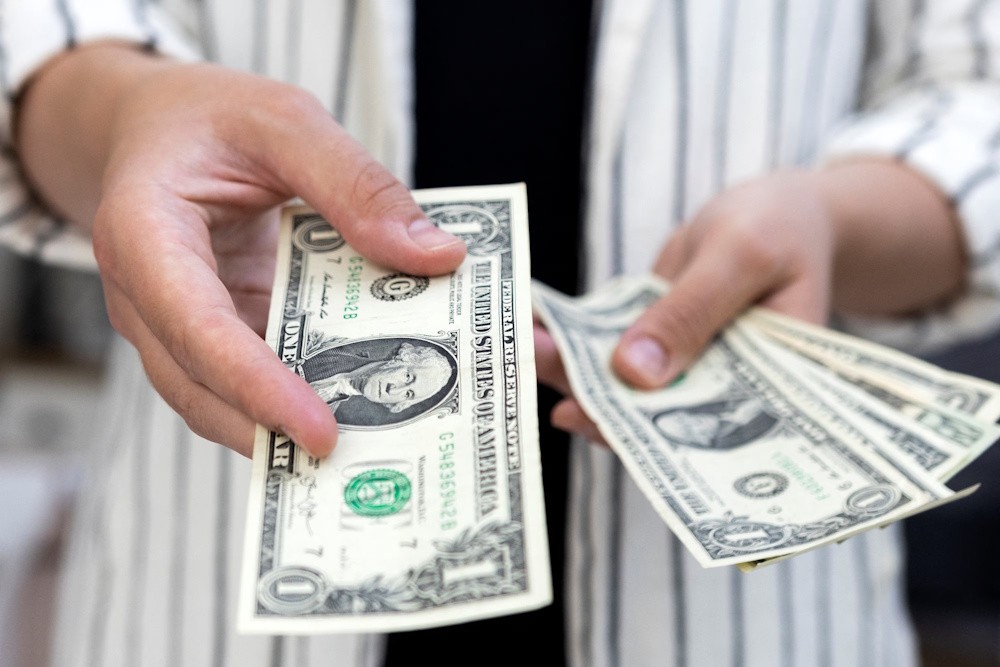
The U.S. dollar remained close to a five-week low against its major counterparts on Friday as investors prepared for a Federal Reserve rate cut anticipated next week. Markets are anticipating a quarter point reduction during the upcoming Federal Open Market Committee meeting on December 9-10, with particular attention on any indications regarding the extent of further easing that may follow. The dollar index, a gauge of the currency’s performance against six competitors, remained unchanged at 99.065 in early Asian trading. A modest increase overnight broke a nine-day losing streak; however, the index had fallen to a five-week low of 98.765 earlier in the session and is still projected to decline by 0.4% this week. Market participants are estimating approximately 86% likelihood of a Federal Reserve rate cut next Wednesday, along with the possibility of 2-3 additional reductions in the following year, according to data.
Federal Reserve officials are closely monitoring the labor market to assess the necessity for additional economic support. Recent data indicates that the number of Americans submitting new applications for unemployment benefits has decreased to its lowest level in over three years last week; however, this figure may have been influenced by the Thanksgiving holiday. The data landscape continues to be fragmented as the unprecedented duration of the government shutdown has postponed certain releases and hindered the collection of additional data. The important monthly payroll figures, which are typically scheduled for release later on Friday, have encountered a delay, and the data from the previous month was not disclosed. However, one of the Federal Reserve’s preferred inflation measures – the PCE deflator – is set to be released later on Friday, although the data pertains to September.
Economists anticipate a 0.2% monthly rise in the core figure. “In our perspective, a monthly increase of 0.2% or less will prompt the FOMC to consider a reduction in the Funds rate next week,” stated Carol Kong in a client note. “Our analysis indicates that the risk involves a modest rise in core PCE inflation of merely 0.1%.” The dollar remained relatively stable at 155.18 yen. The euro remained unchanged at $1.1647, while sterling stabilized at $1.3326 after retreating from Wednesday’s six-week high in the prior session. The dollar has faced increased pressure lately as investors consider the possibility of White House economic adviser Kevin Hassett succeeding Jerome Powell as Fed Chair when his term concludes in May. Hassett is anticipated to advocate for additional rate reductions.
Next week brings a series of central bank policy decisions, starting with the Reserve Bank of Australia’s on Tuesday, followed by the Bank of Canada’s on Wednesday, and concluding with the Swiss National Bank’s on Thursday. The subsequent week will see the European Central Bank, the Bank of England, Sweden’s Riksbank, and the Bank of Japan convening to establish their monetary policies. Three government officials informed Reuters that the BOJ is expected to increase rates this month; however, the subsequent actions remain unclear. Markets are currently pricing in only one additional rate hike for next year, with approximately a 50% probability of another increase. The Australian dollar remained steady at $0.6609 following a rise to a two-month peak of $0.6624 on Thursday. Canada’s loonie remained relatively stable at C$1.3961 against the US dollar, while the Swiss franc held steady at 0.8035 per dollar after a notable decline from Wednesday’s two-week peak of 0.7992 during the overnight session.